Bergdorf Goodman
Modernizing the iOS App Experience
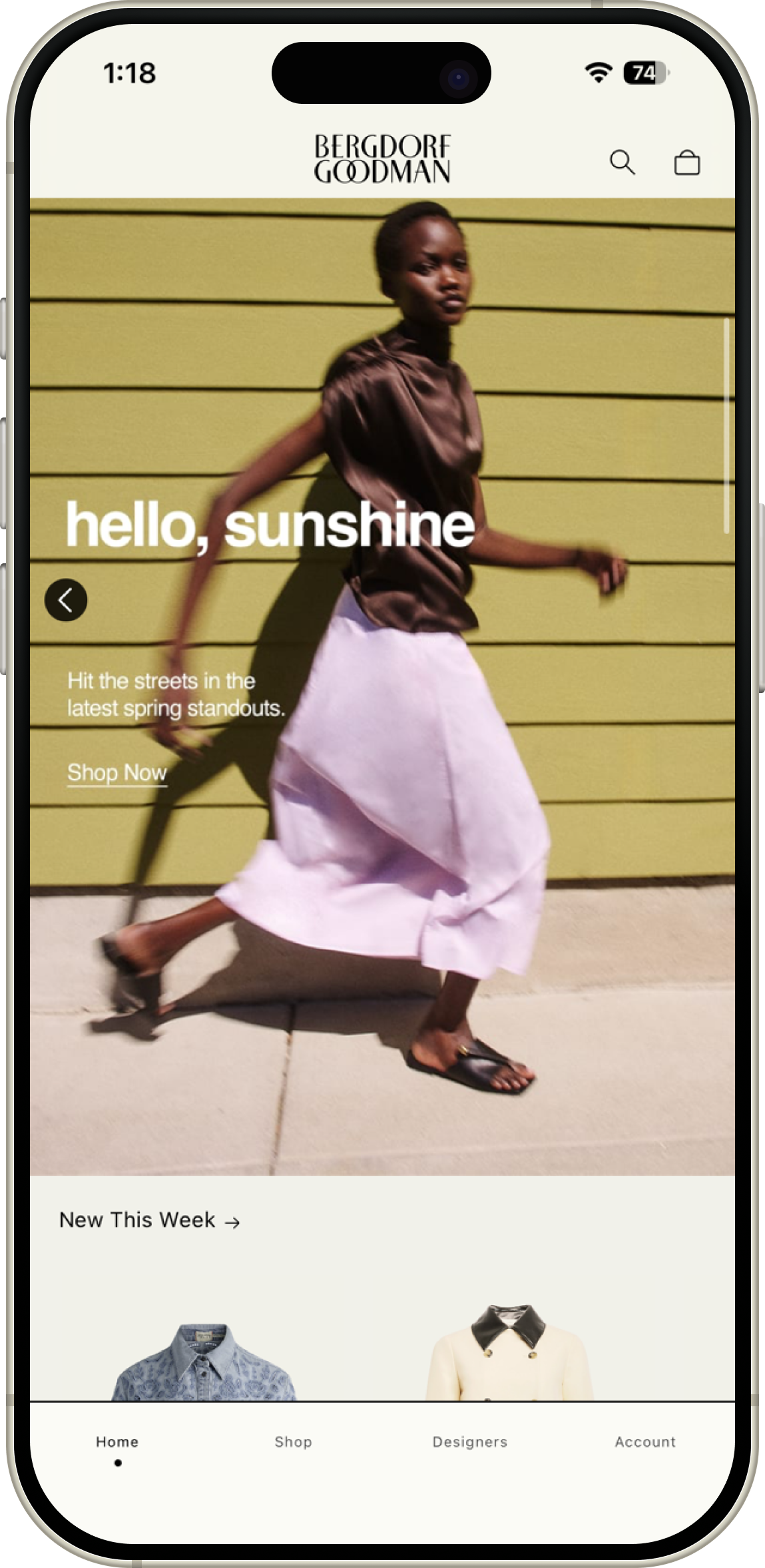
Replacing a glitchy legacy architecture with a premium app experience required a ground-up redesign of the native iOS app. The resulting interface supported 1.8M total visits at scale and unlocked a +0.5% baseline conversion lift.
Role
Senior Manager, Product Design
Focus
Strategic Leadership, Cross-functional Management, Design Systems
Timeline
10 Weeks
Team
Product Management, Engineering, Content Strategy, Brand/Creative, Internal Senior Leadership
The Challenge
Modernizing a Luxury Icon Under Enterprise Constraints
Bergdorf Goodman required a native iOS app that fully matched its legendary physical prestige while actively overcoming years of compounding legacy technical debt. The project had been put on hold for years due to financial constraints. By the time it was greenlit, the budget remained tight: we were strictly required to build within the technical framework of the existing Neiman Marcus app architecture, minimizing net-new code while ensuring the end product looked and felt like an exclusively Bergdorf Goodman luxury experience.
The previous app was an un-intuitive patchwork of disjointed contributions from various past designers and developers. It was plagued by clunky bottom-of-the-funnel web-view dependencies and static, uninspiring discovery paths. The primary objective was to audit this fragmented ecosystem, unify the brand's visual identity, and build a high-performance e-commerce platform that satisfied the exacting expectations of high-net-worth customers.
The Approach
Cross-Functional Orchestration and Design Thinking
As Senior Manager of Product Design, I led this high-stakes end-to-end UX/UI transformation. To navigate our tight technical guardrails, I established a highly collaborative workflow that brought the brand and engineering teams together.
Co-Design Sprints and Workshop Governance
Brand/Creative Alignment Workshops: I led interactive workshops with the BG Brand and Creative team to map out their strict aesthetic parameters and luxury storytelling requirements.
Developer Co-Design Sprints: Rather than throwing designs over the wall, I initiated collaborative sprints with the engineering team. We co-designed layouts directly within technical constraints, ensuring engineering boundaries actively informed our UI explorations to avoid costly rewrite cycles.
Figma Dev Mode Integration: We established Figma Dev Mode as our definitive single source of truth, establishing a shared vocabulary of configurable, reusable components that drastically accelerated development velocity.
UX Rigor
Mapping Flows and Heuristics
To transform the disjointed, legacy app into an intuitive ecosystem, I mapped out every single core section and user flow across the entire application, from initial product discovery to final purchase.
Nielsen Norman Heuristic Alignment
Our redesign was deeply anchored in Nielsen Norman user experience principles, specifically focusing on two core pillars:
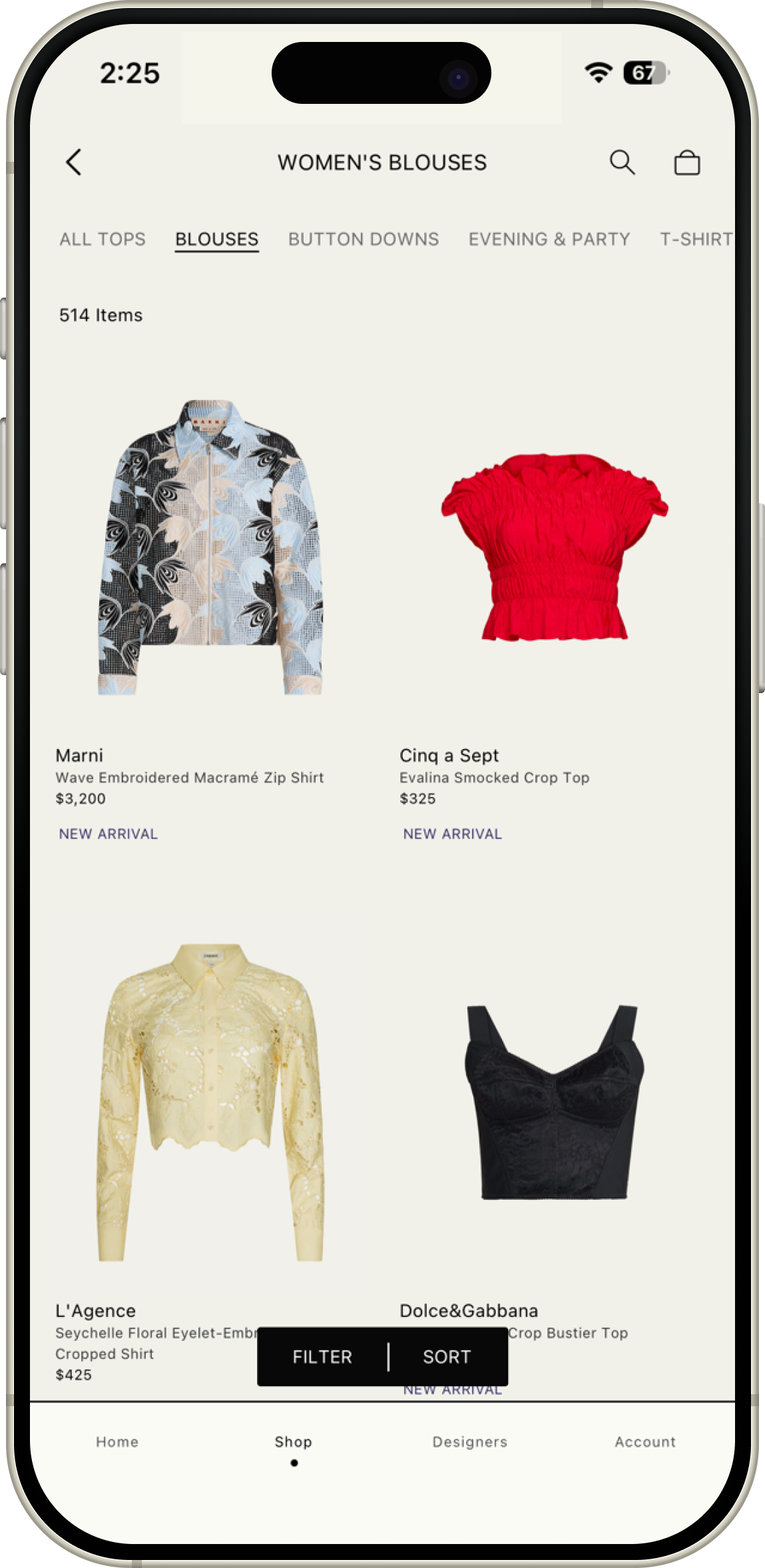
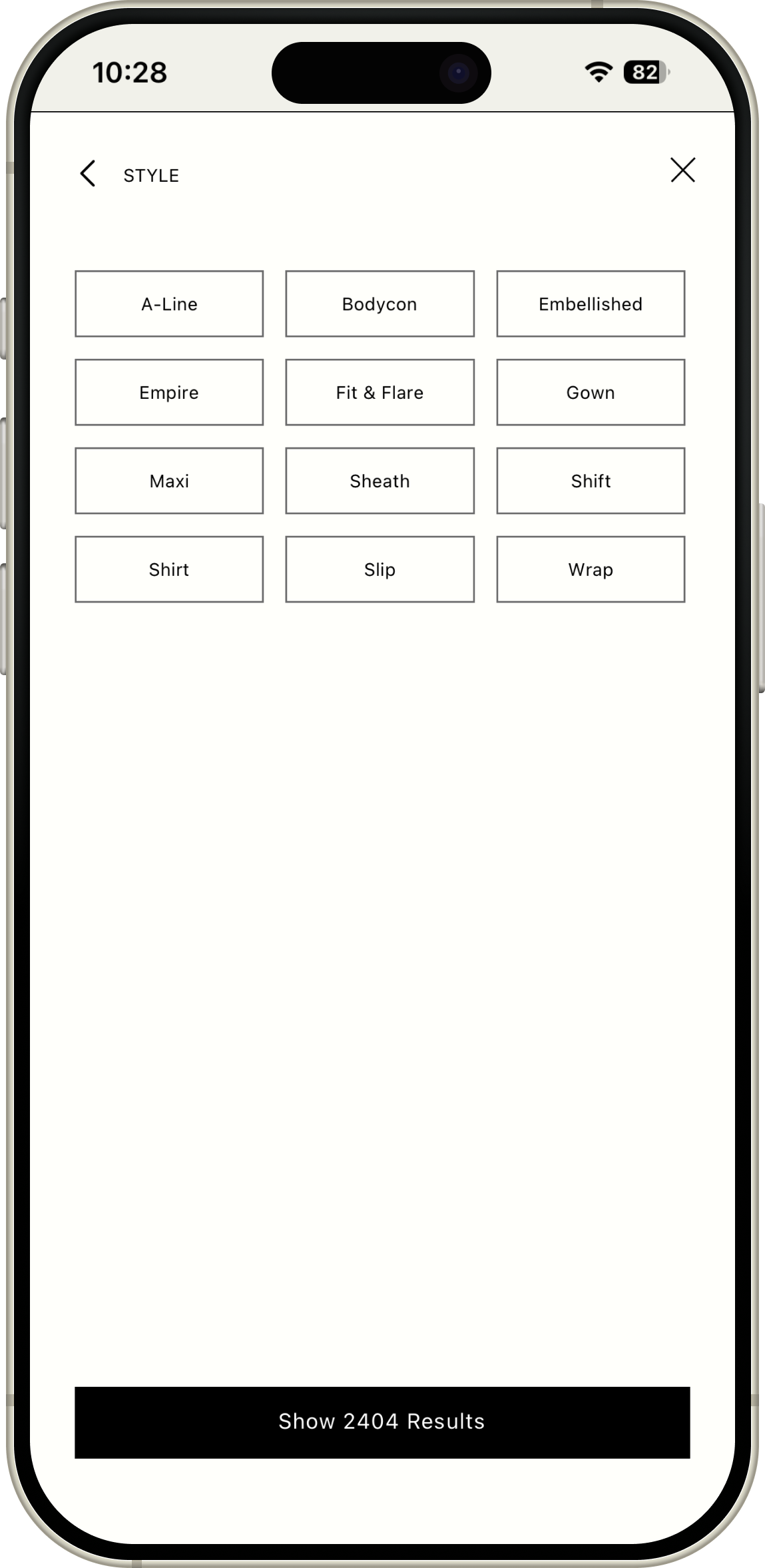
Consistency and Standards (Heuristic #4): We systematically dismantled the fragmented, “pieced-together” layouts of the old app. By establishing a completely new, unified design system, we ensured that visual patterns, typography, and interactive elements remained strictly predictable across every view.
Flexibility and Efficiency of Use (Heuristic #7): We mapped out highly optimized, contextual navigation pathways, ensuring luxury shoppers could seamlessly move between high-end editorial content and high-intent checkout funnels.
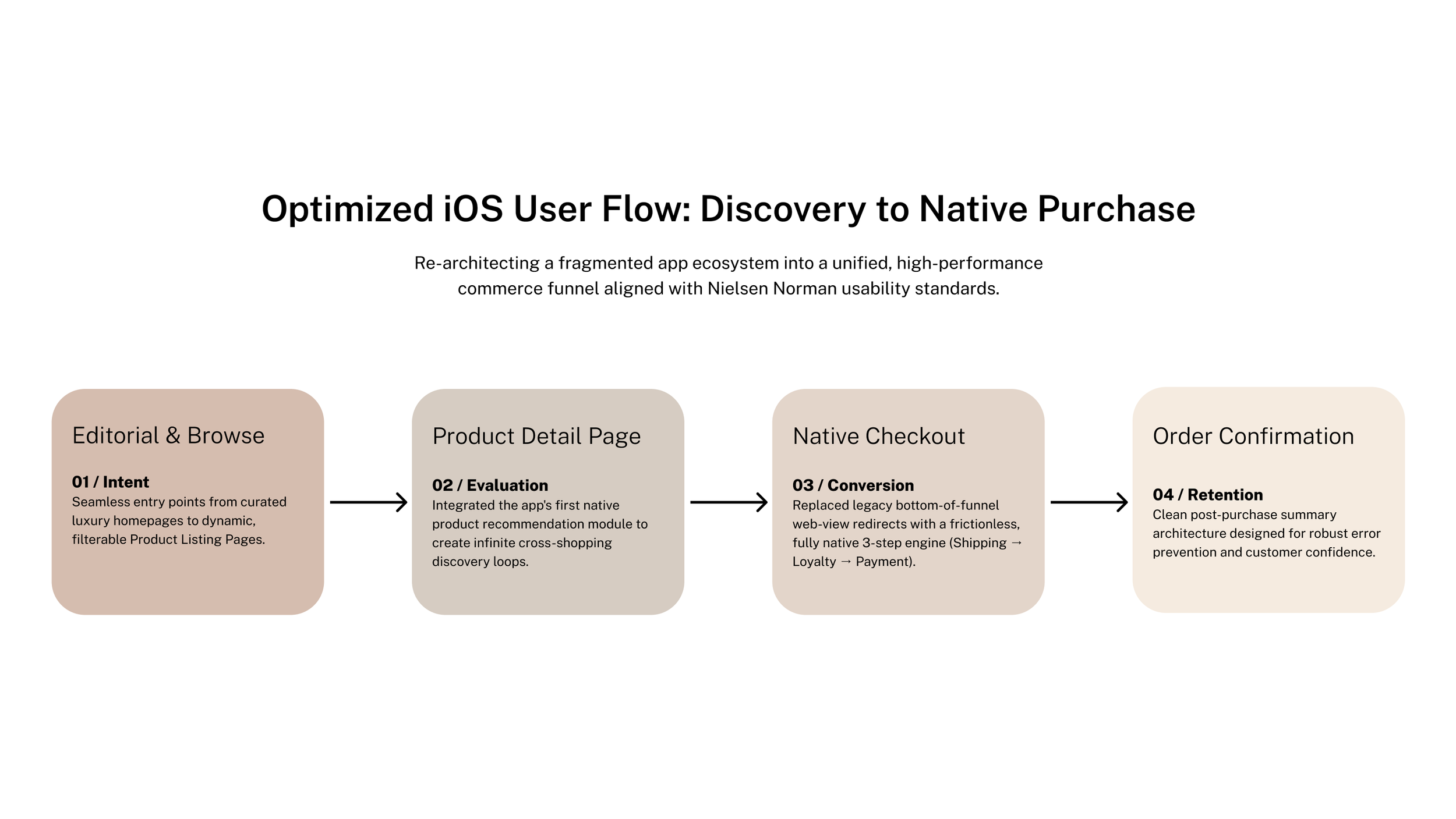
The Ultimate Pivot Point
The Brand vs. Code Paradox
The ultimate challenge of this project was a strategic pivot point: How do you make a shared, standardized multi-brand code infrastructure feel like a bespoke luxury boutique?
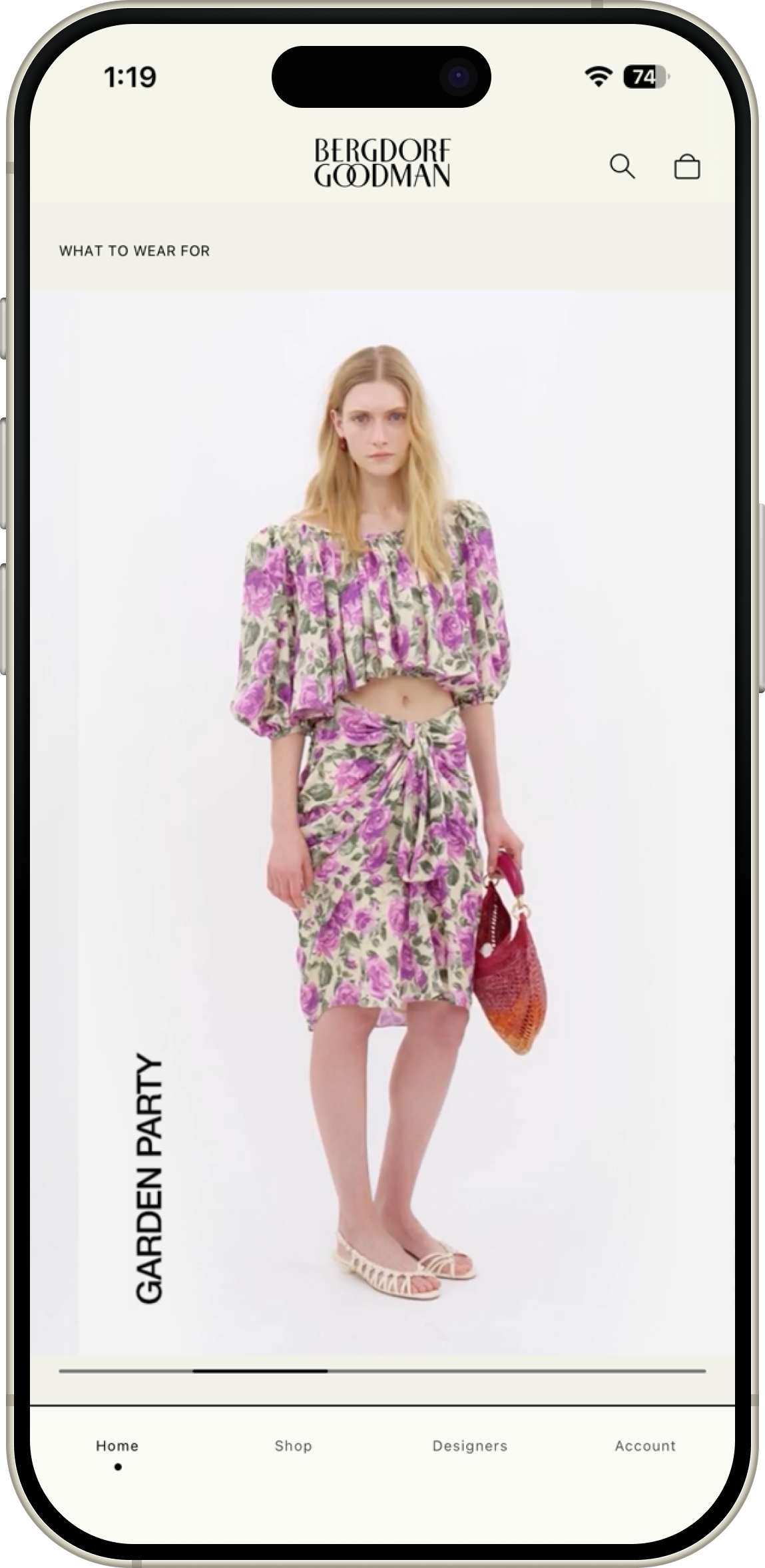
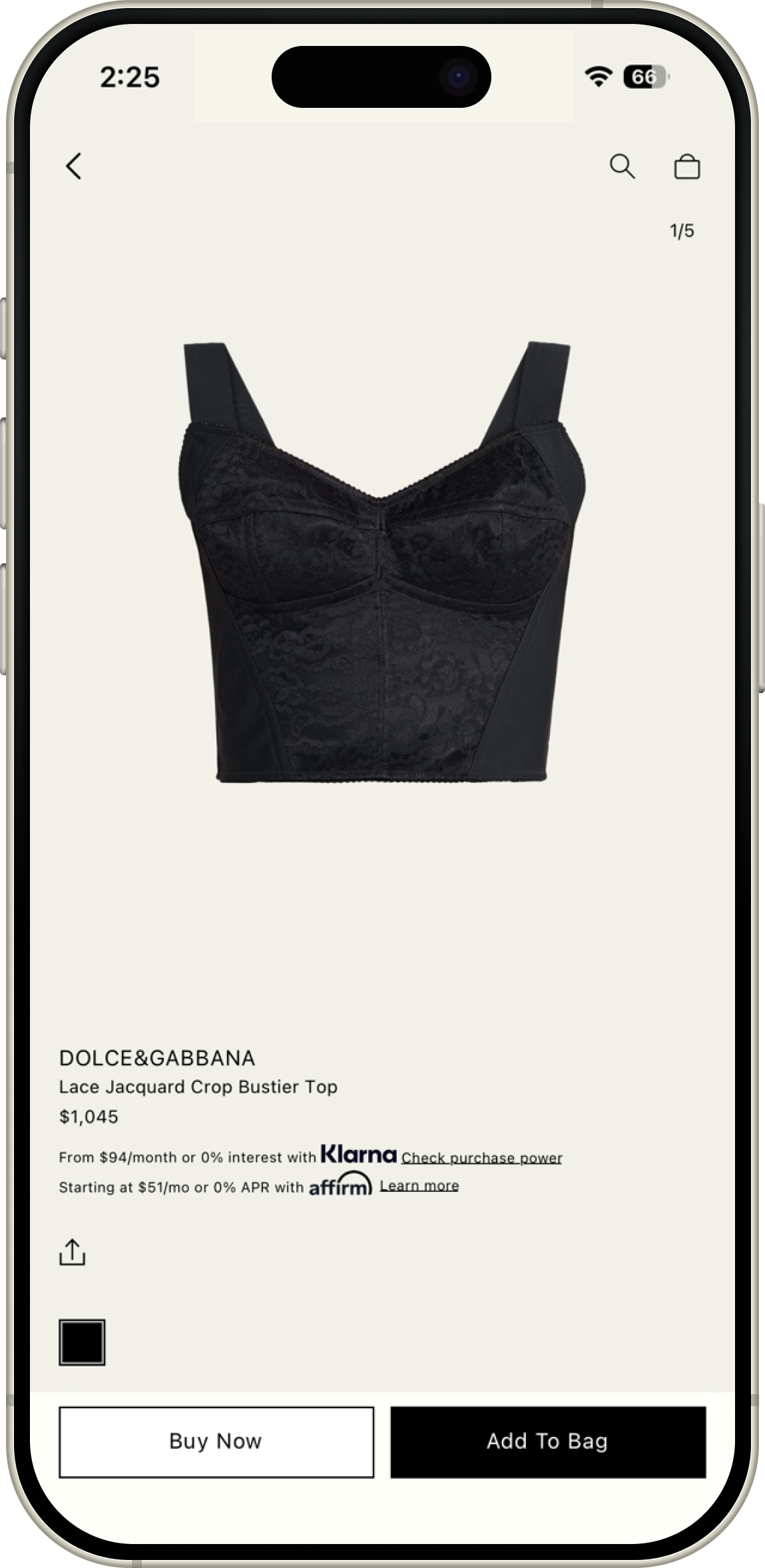
Engineering constraints dictated that we could not write sprawling net-new code structures. When the creative team demanded unique, highly customized layouts for premium storytelling, I negotiated a brilliant middle ground: we engineered a robust system of highly configurable design tokens and layout modules. By changing structural styling properties rather than rewriting the backend architecture, the creative team gained total visual autonomy to tell the Bergdorf Goodman story, while the tech team maintained a clean, unified enterprise codebase.
Impact and Results
+0.5%
Baseline CVR Lift via a fully native checkout engine.
1.8M
Total App Visits supported seamlessly at scale.
“Super seamless and easy to use.”
—App Store Review
Complete qualitative turnaround from legacy, glitchy architecture.
By bridging the gap between classic luxury aesthetics and modern app infrastructure, we transformed a legacy digital liability into a primary business growth driver:
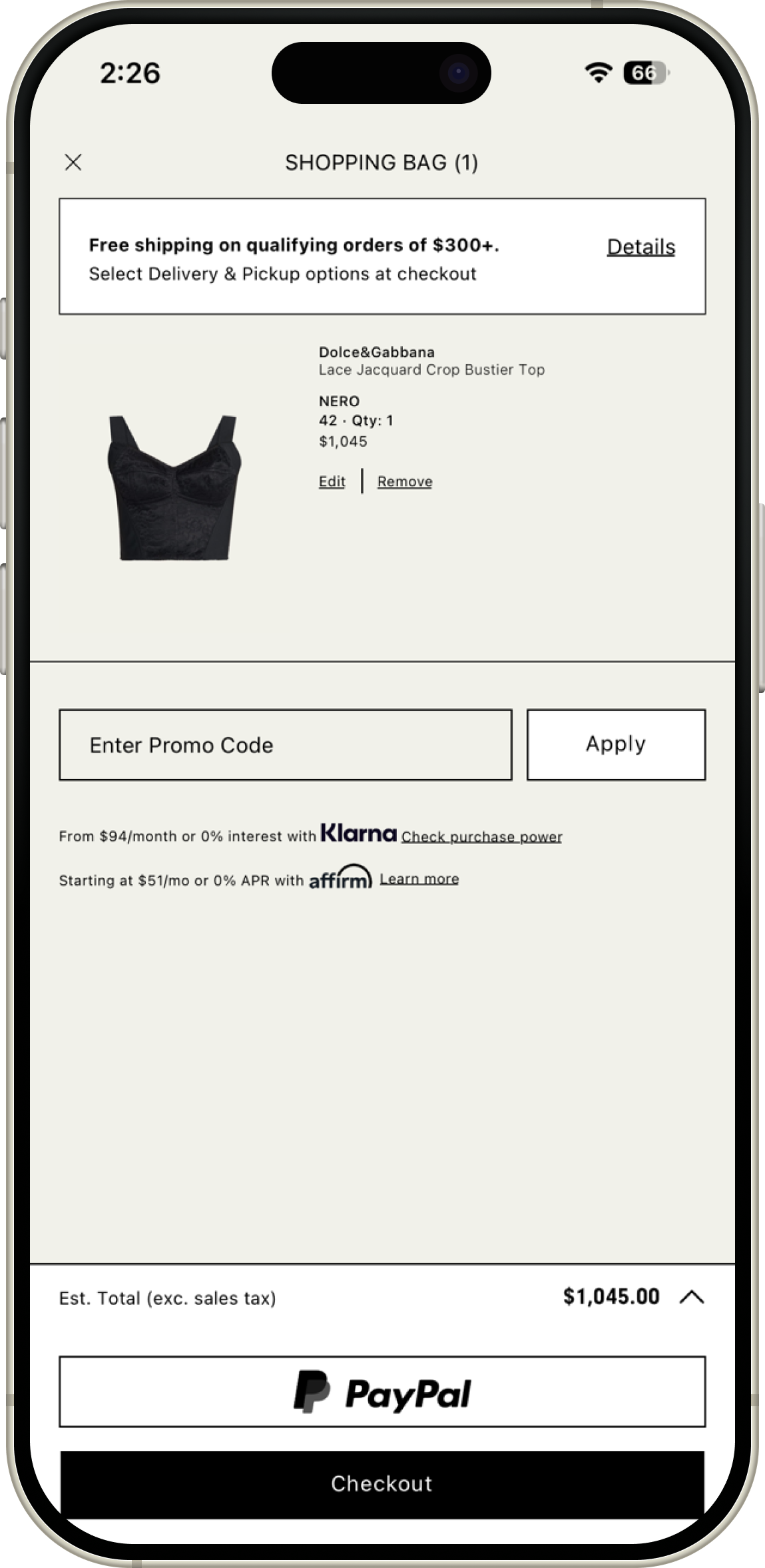
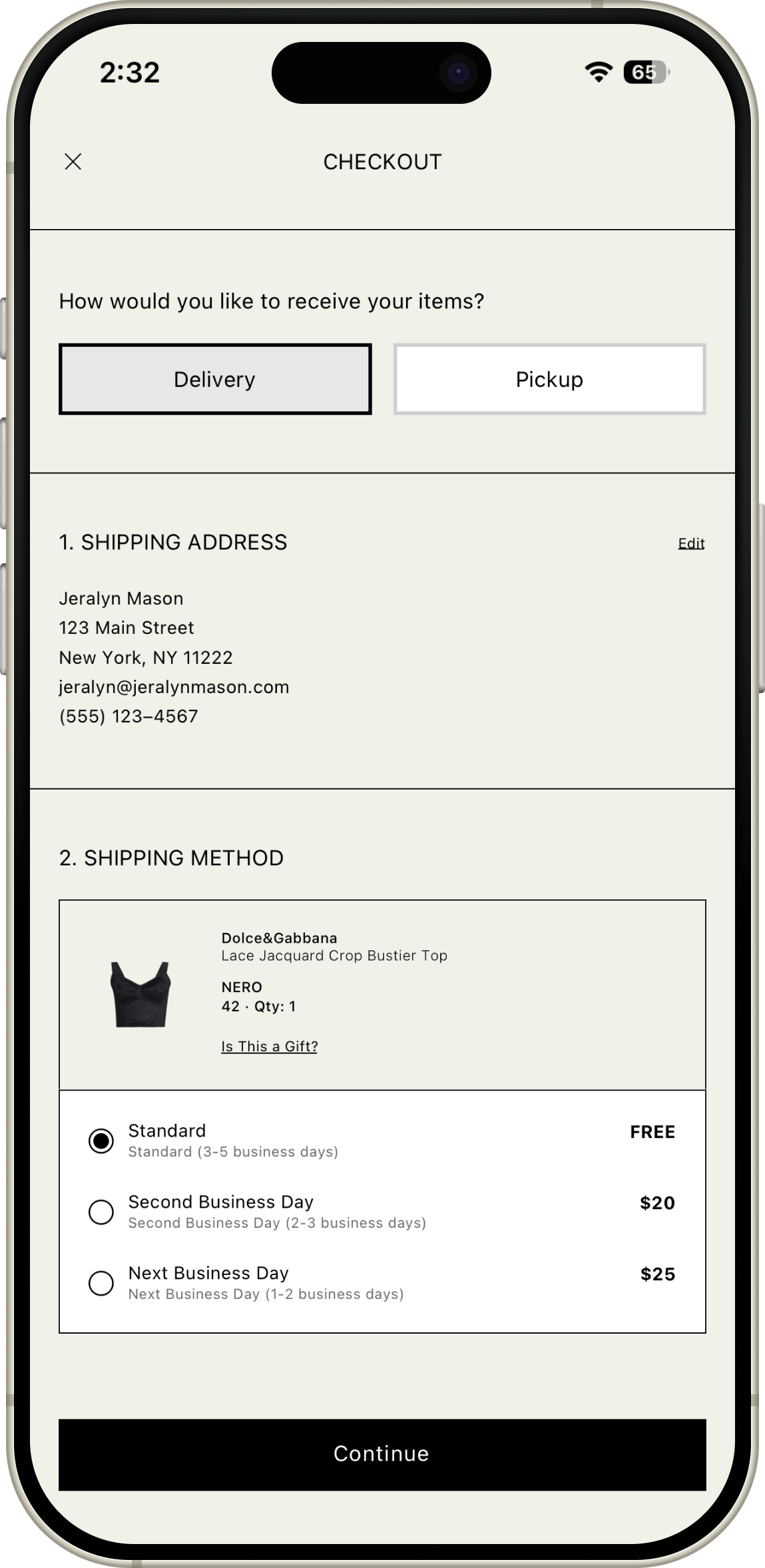
Achieved Target Conversion Lift: Successfully drove a +0.5% lift in baseline Conversion Rate across the app ecosystem by designing a frictionless, fully native checkout engine that completely eliminated legacy web-view redirects.
Stabilized Customer Experience at Scale: Built a high-performance, seamless UI architecture that successfully scaled to support 1.8M total visits, securing a total qualitative sentiment turnaround from “the most frustrating app” to “super seamless and easy to use.”
Eliminated Critical Bottom-of-Funnel Friction: Rescued the broken checkout flow and integrated the app’s first-ever native product recommendation modules to drive discovery and Average Order Value.
Established a Cross-Platform Web Blueprint: Maximized enterprise-wide value by structuring this new component architecture to serve as the definitive design system baseline, successfully dictating the long-term direction for future responsive web properties.
Next Case Study:
Neiman Marcus and Bergdorf Goodman
Bringing Premium Rewards Online →