TIFFANY & CO.
Elevating Third Party Automation to Luxury Service Standards
Maximizing customer acceptance metrics required bridging the gap between third-party automation and luxury hospitality. This cross-functional initiative delivered a mobile-optimized chat framework and a scalable conversational template.
Role
Manager, Digital Product Design
Focus
Service Design, Conversational UI, Design Systems, Strategic Leadership
Timeline
3 Weeks
Team
Product Management, Engineering, Copy, Third-Party Vendors
The Challenge
Elevating Digital Service
Standard out-of-the-box customer service chat features frequently feel utilitarian or even disruptive. This is the exact antithesis of the refined, attentive service a client expects from a premier luxury brand. The core challenge was to transform a passive customer service widget into an elegant digital concierge that mirrored the high-touch experience of walking into a physical boutique.
As Manager of Digital Product Design, I spearheaded a multi-year initiative to bridge the gap between complex automated functionality and elite brand prestige. We needed to solve two distinct operational problems. First, we had to engineer a warm, proactive digital invitation that felt welcoming rather than intrusive. Second, we needed to seamlessly integrate third-party vendor software to handle high-volume inquiries without eroding the brand's signature voice and luxury aesthetic.
The Approach
Collaborative Alignment and System Customization
To build a conversational framework that met our strict visual standards, I led a multi-disciplinary squad of product managers, engineers, copywriters, and external technical vendors.
The Service Alignment Workshops
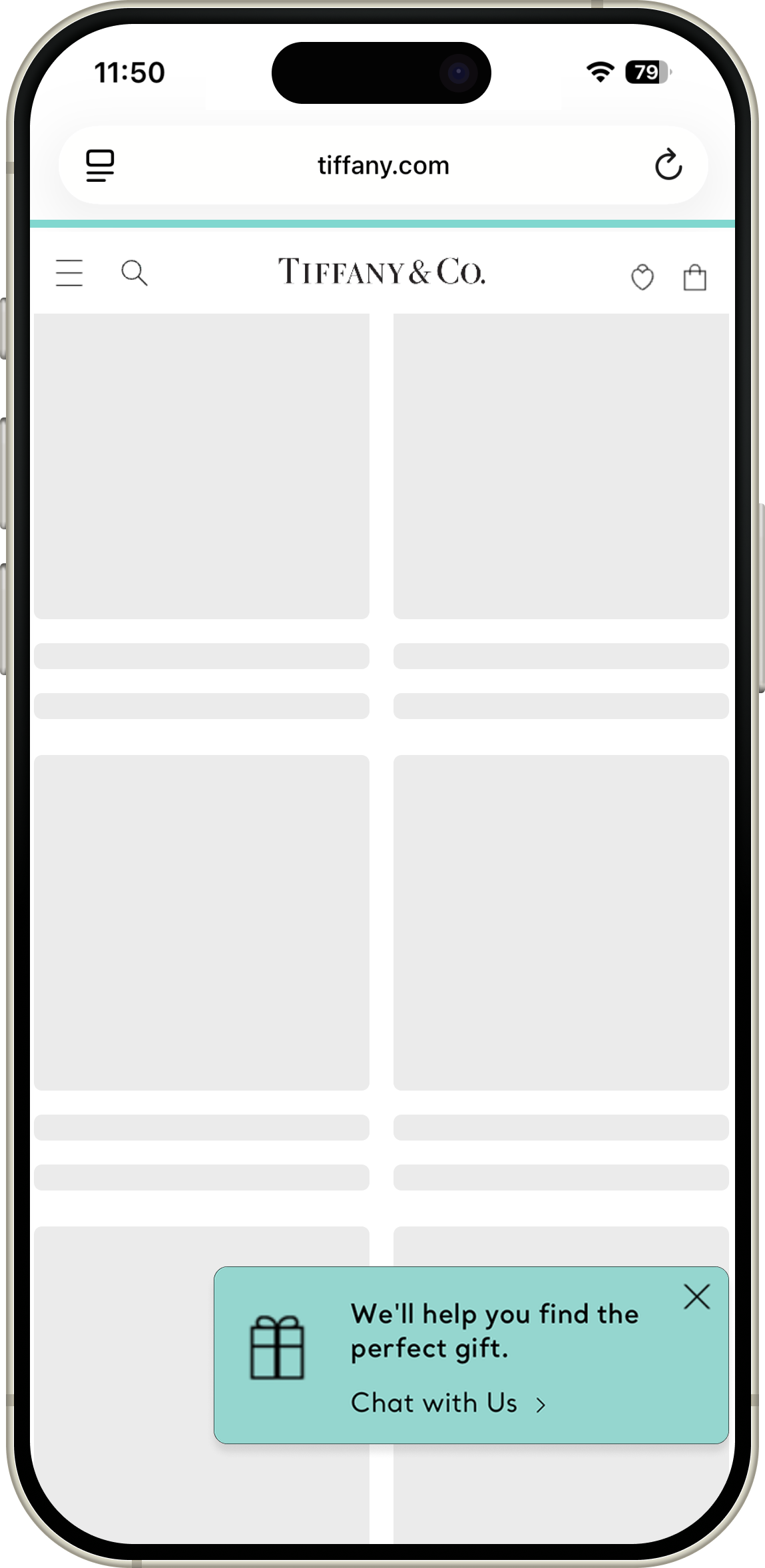
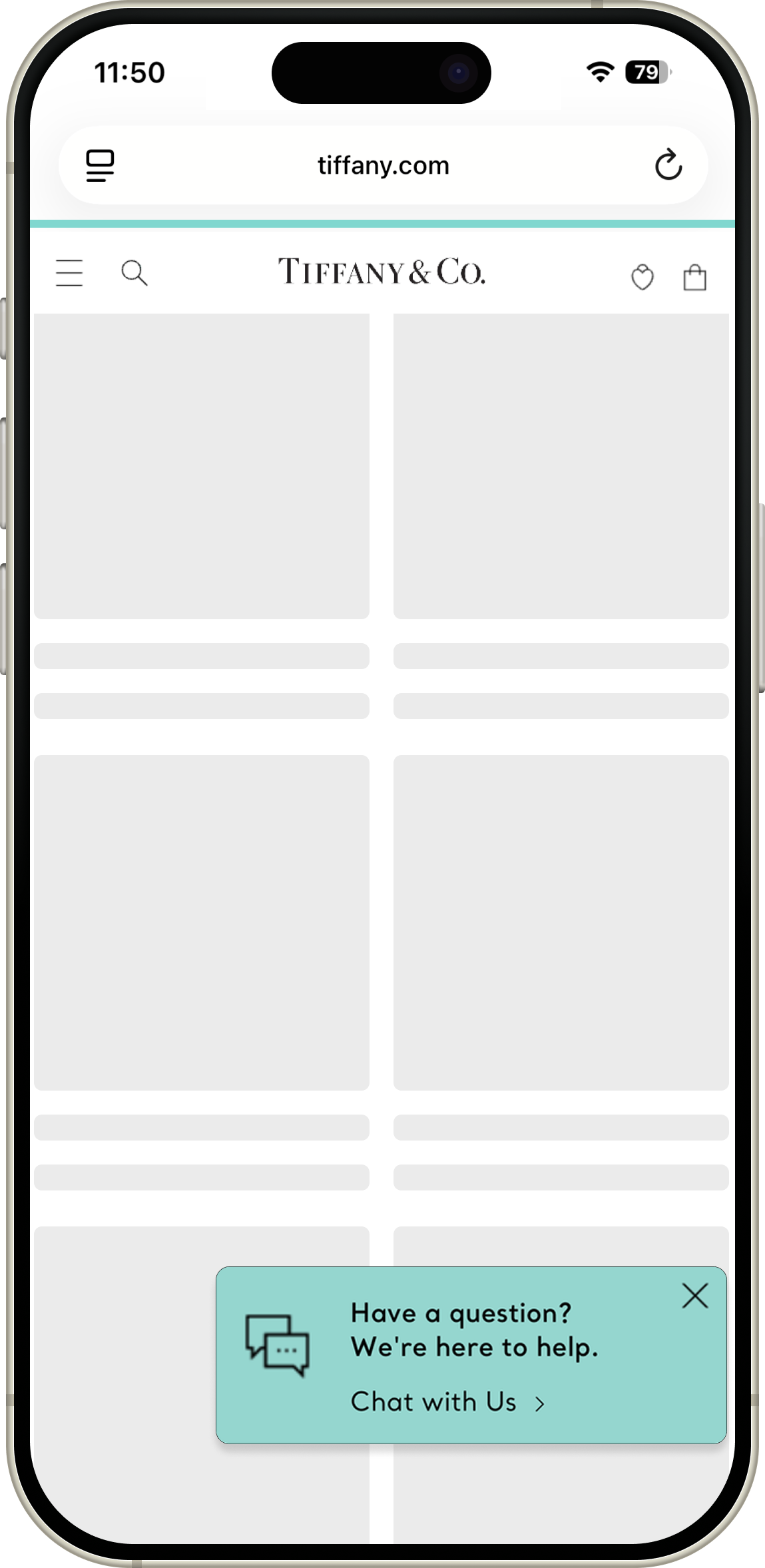
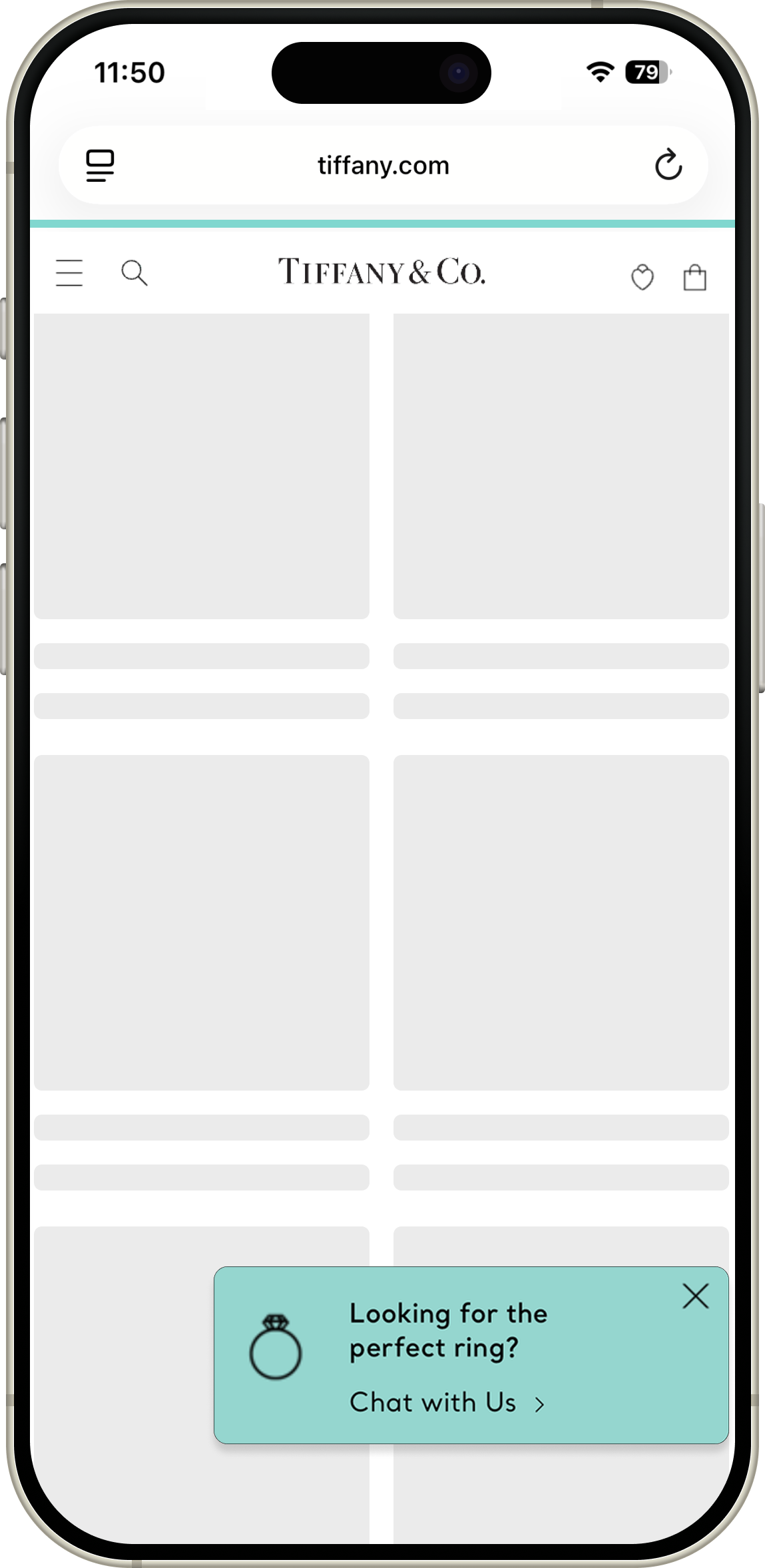
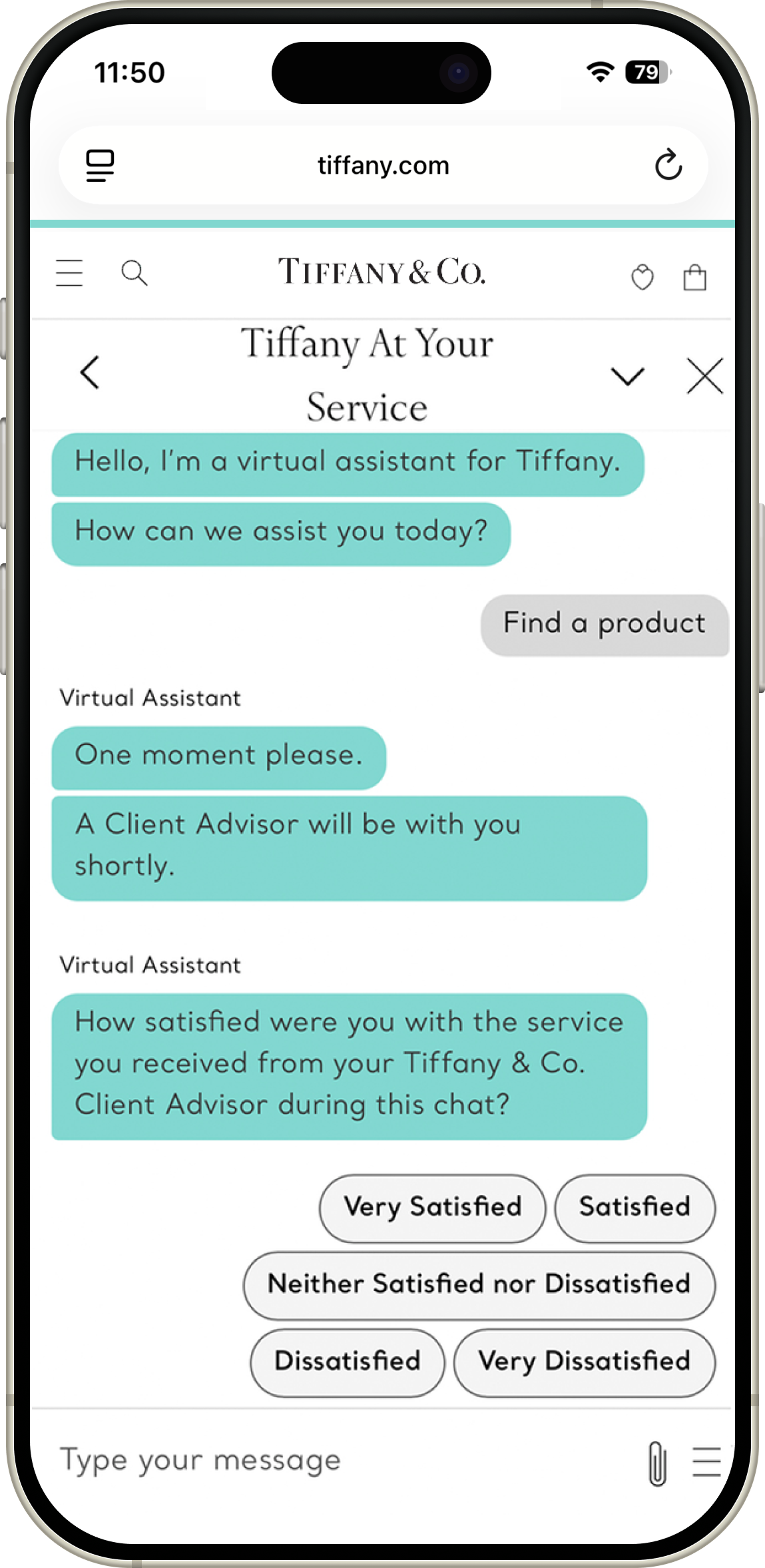
Even though the technical integration relied on third-party software, our design team had to work incredibly closely with cross-functional partners to ensure the conversational layer felt entirely native. I led collaborative workshops focused on the entry mechanics and visual progression of the chat journey. We mapped out exactly how the initial invitation would appear, how it would transition into the active chatbot window, and how the conversational script could remain both friendly and deeply respectful. Our goal was to ensure the digital interface matched the exact behavioral etiquette of an expert in-store sales associate.
UX Rigor
Heuristic Timing and Design System Governance
Our design framework focused heavily on safeguarding the user experience against jarring pop-ups, leaning on established usability principles to balance business utility with user comfort.
Defending User Freedom via Behavioral Triggers
To prevent the proactive chat from becoming an intrusive disruption, I applied Nielsen Norman usability heuristics, focusing specifically on User Control and Freedom (Heuristic #3) and Aesthetic and Minimalist Design (Heuristic #8).
The Interaction Delay: In collaboration with our analytics team, we discovered that triggering an immediate pop-up caused instant user frustration. We engineered a deliberate behavioral delay. The invitation would only appear gracefully after a user had scrolled to a specific point on a high-intent page without clicking on any alternative interactive elements.
The Non-Intrusive Dismissal: To give users total control over their viewport, we designed a prominent close icon on the invitation. If clicked, the menu gracefully minimized into a subtle icon. This clean state successfully kept the layout uncluttered, yet allowed the customer to easily reactivate the chat on their own terms whenever they were ready.
Bridging Vendor Constraints with CSS Precision
Third-party enterprise software is notoriously rigid, often breaking visual consistency. I spearheaded the comprehensive frontend customization of the chat ecosystem, translating vendor constraints into a first-class citizen of our design system. I worked hand-in-hand with our development team, using Figma and precise CSS overrides to completely restyle the out-of-the-box component. We enforced our native typographic hierarchies, exact color contrast ratios, custom brand spacing, and stylized iconography to ensure the vendor widget looked completely bespoke.
The Luxury Hand-Off and Scale
In high-end service design, user retention is deeply dependent on frictionless transitions. While the third-party integration handled the complex backend data transfer of client history to live representatives, my role was ensuring the user-facing transition remained entirely invisible and fluid inside the active window. We eliminated jarring page refreshes and prevented the user from having to repeat their context, successfully protecting customer trust.
Following a successful pilot, I codified this conversational UI template framework into our global design system. This established a repeatable deployment playbook, allowing global e-commerce and operations teams to scale future third-party tools autonomously while maintaining total visual compliance.
Impact and Results
Optimized Support Routing
Outperformed legacy service benchmarks by replacing the static chat widget with an active, behavioral-based invitation model that drove significantly higher chat acceptance.
By transforming a rigid vendor widget into an elegant, visual-first digital concierge, we proved that meticulous interface customization and behavioral timing can drive massive operational value without requiring bespoke backend development.
Elevated Customer Support Routing: Successfully replaced the traditional passive chat bubble with a responsive, intent-driven invitation model that captured significantly higher interaction volume.
Sustained Purchase Momentum: Strengthened core checkout paths by resolving high-intent buyer hesitation through timely, branded digital hospitality.
Optimized Operational Workflow Velocity: Mitigated repetitive customer service inquiries through tailored conversational AI customization, liberating live brand experts to focus on high-value client consultations.
Standardized Conversational UI Framework: Codified a comprehensive, responsive vendor customization playbook within the global design system, empowering internal engineering teams to deploy future third-party integrations with zero visual drift.
Mitigated Funnel Abandonment
Boosted direct consideration through a validated, respectful service layer that addressed high-intent buyer hesitation directly on critical category paths.
Next Case Study:
Bergdorf Goodman
Modernizing the iOS App Experience →