TIFFANY & CO.
Transforming Static Photography into a Checkout Shortcut
Designing a responsive slide-out drawer and an intent-driven micro-interaction overlay transformed static luxury editorial photography into a multi-item checkout shortcut. This interactive framework boosted purchase intent while protecting brand integrity.
Role
Manager, Digital Product Design
Focus
Visual Commerce, Interactive Merchandising, Content Strategy, Design Systems
Timeline
3 Weeks
Team
Product Management, Engineering, Merchandising, Creative, Content Strategy
The Challenge
The Friction of Inspiration
Luxury editorial photography is meticulously designed to evoke emotion and desire, but these high-art images frequently acted as dead ends in the digital customer journey. Shoppers would be inspired by a model wearing a curated stack of high-value jewelry but were forced to manually search the entire site to identify and find those specific pieces. This fragmented process inevitably led to consumer frustration and lost sales.
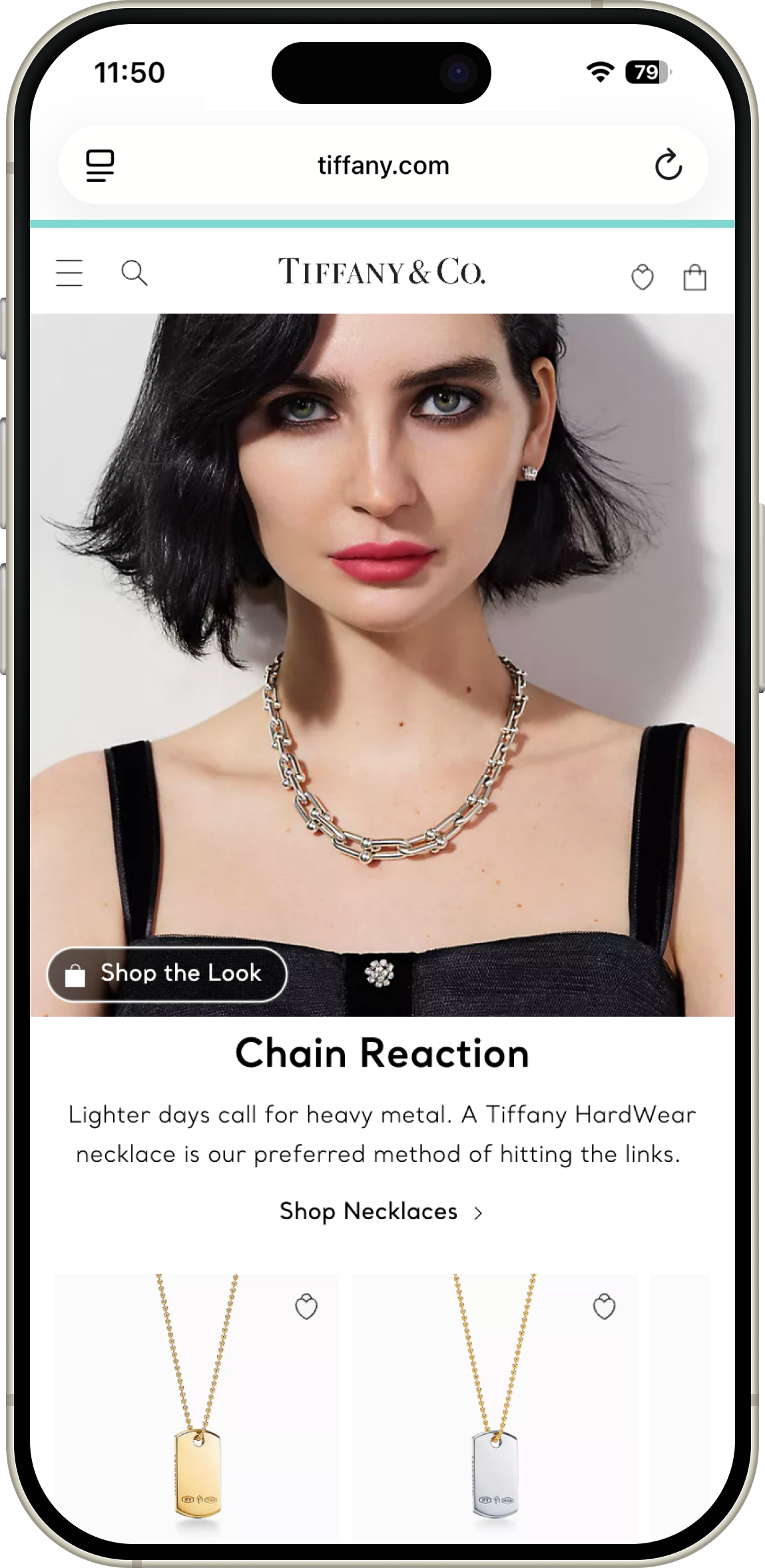
As Manager of Digital Product Design, I led the Shop the Look initiative to bridge this critical gap between content and commerce. The core challenge was cross-functional and aesthetic. We needed to introduce an interactive, shoppable layer that was highly intuitive and discoverable on mobile web, yet elegant enough to respect the brand's visual heritage and preserve the complete integrity of full-page creative photography.
The Approach
Collaborative Alignment and Prototypes
To build an interactive shopping pattern without compromising our strict brand aesthetics, I worked at the intersection of creative, content strategy, and frontend engineering to develop an immersive, less is more interaction model.
The Creative Co-Creation Sessions
Securing buy-in from our strict creative directors and photography teams required a deeply collaborative approach. I led alignment sessions where we shared high-fidelity, interactive prototypes directly with the creative teams. By demonstrating the interaction patterns in real time, we proved that the visual impact on the photography would be exceptionally low. This collaborative prototyping phase allowed us to design an animated, contextual entry point that only revealed itself when a user actively engaged with an asset, successfully turning legacy media assets into high-performing conversion engines.
UX Rigor
Our design framework was deeply rooted in Nielsen Norman usability heuristics, focusing specifically on balancing discoverability with visual restraint to manage cognitive load in a luxury environment.
Defending Brand Aesthetics via Intent-Driven CTAs
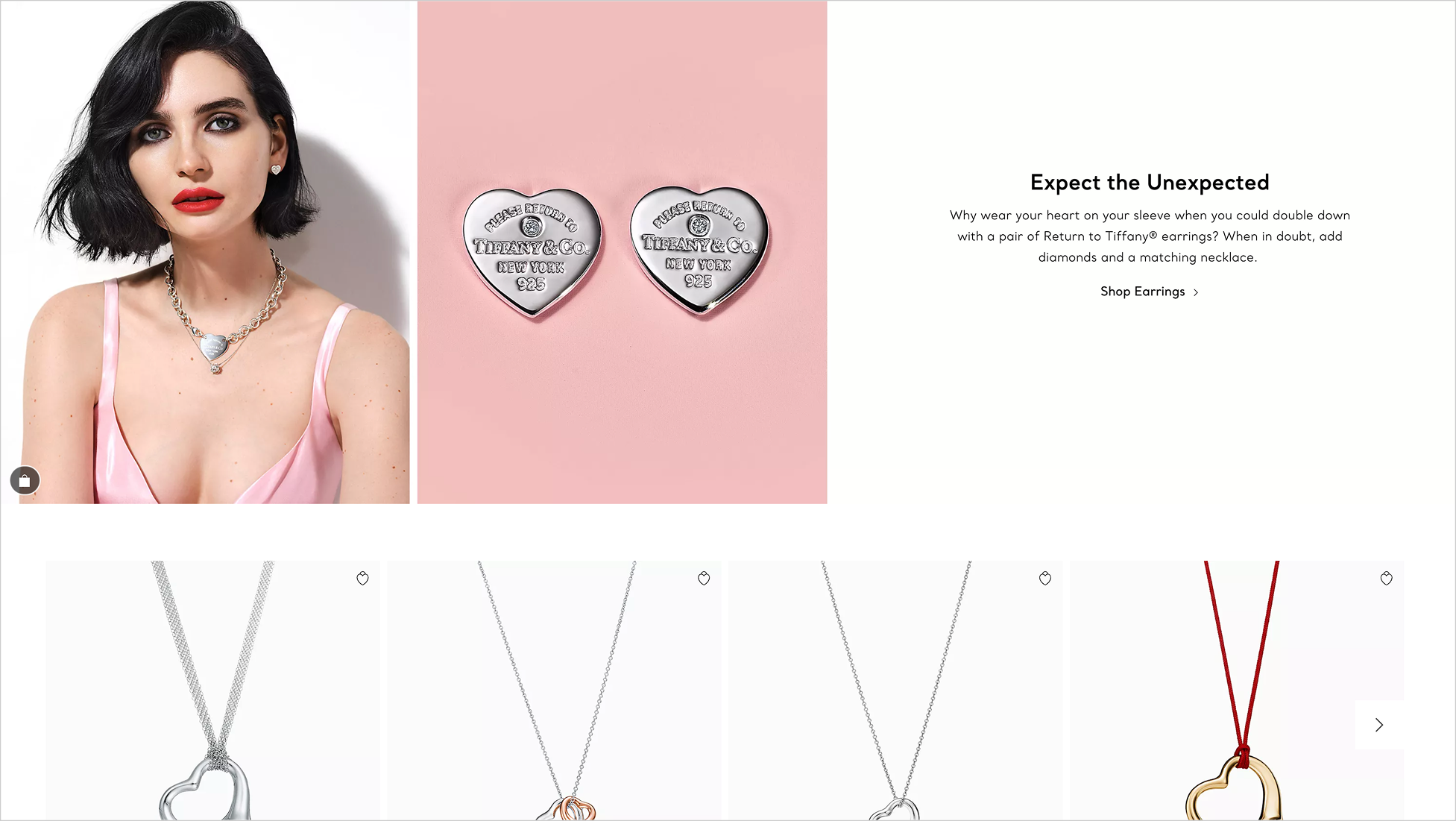
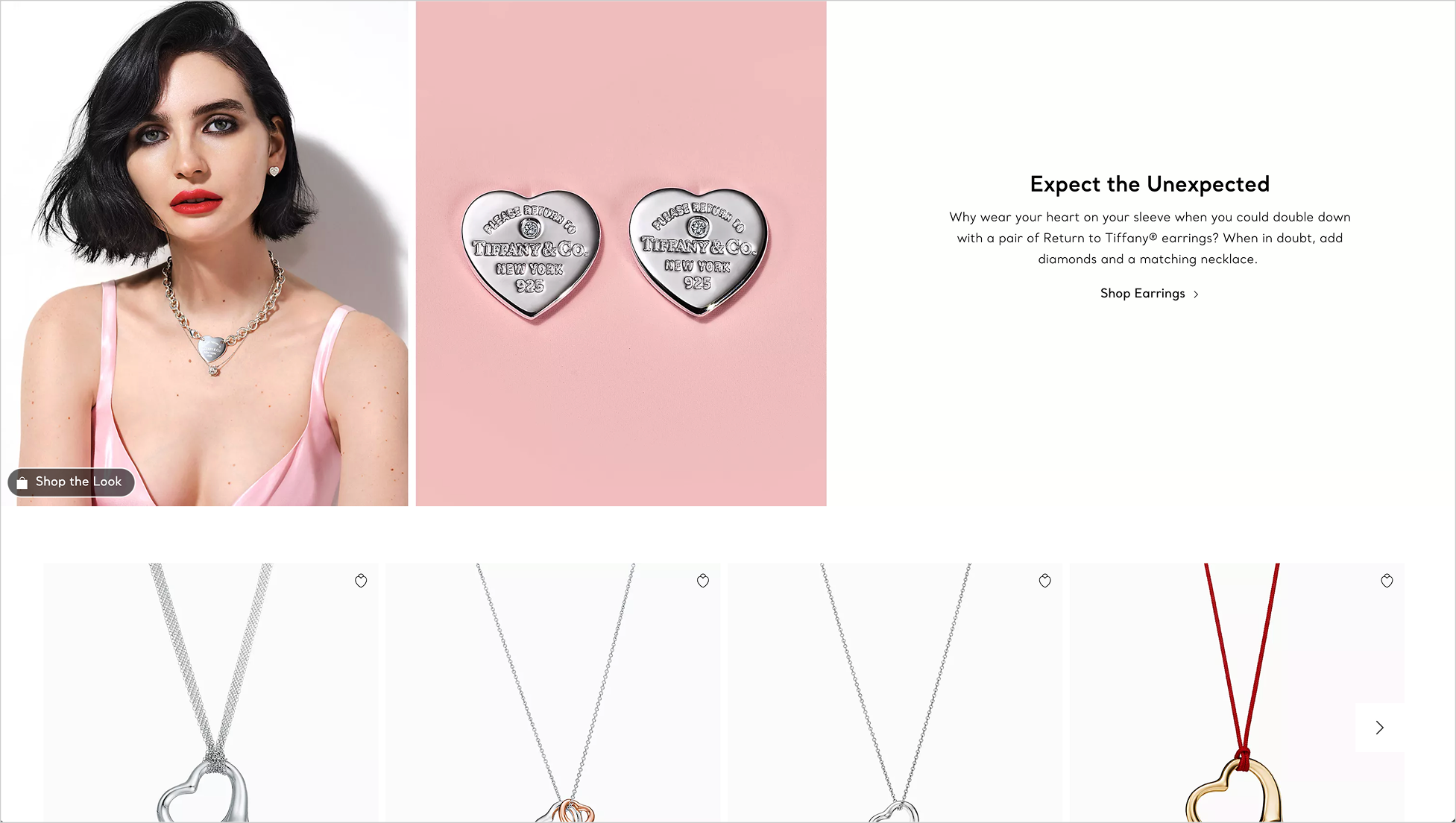
To ensure our digital overlay elements never compromised the uncompromising standards of our photography teams, I leaned on Aesthetic and Minimalist Design (Heuristic #8). We engineered a subtle shopping bag icon overlay that gracefully animated into a clean Shop the Look call-to-action upon user hover or tap. By utilizing this intent-driven micro-interaction, the CTA only expanded when a visitor demonstrated direct interest in the imagery, leaving the artwork completely undisturbed during passive browsing and keeping the UI completely free of irrelevant or rarely needed information.
The Responsive Mini-Boutique Drawer
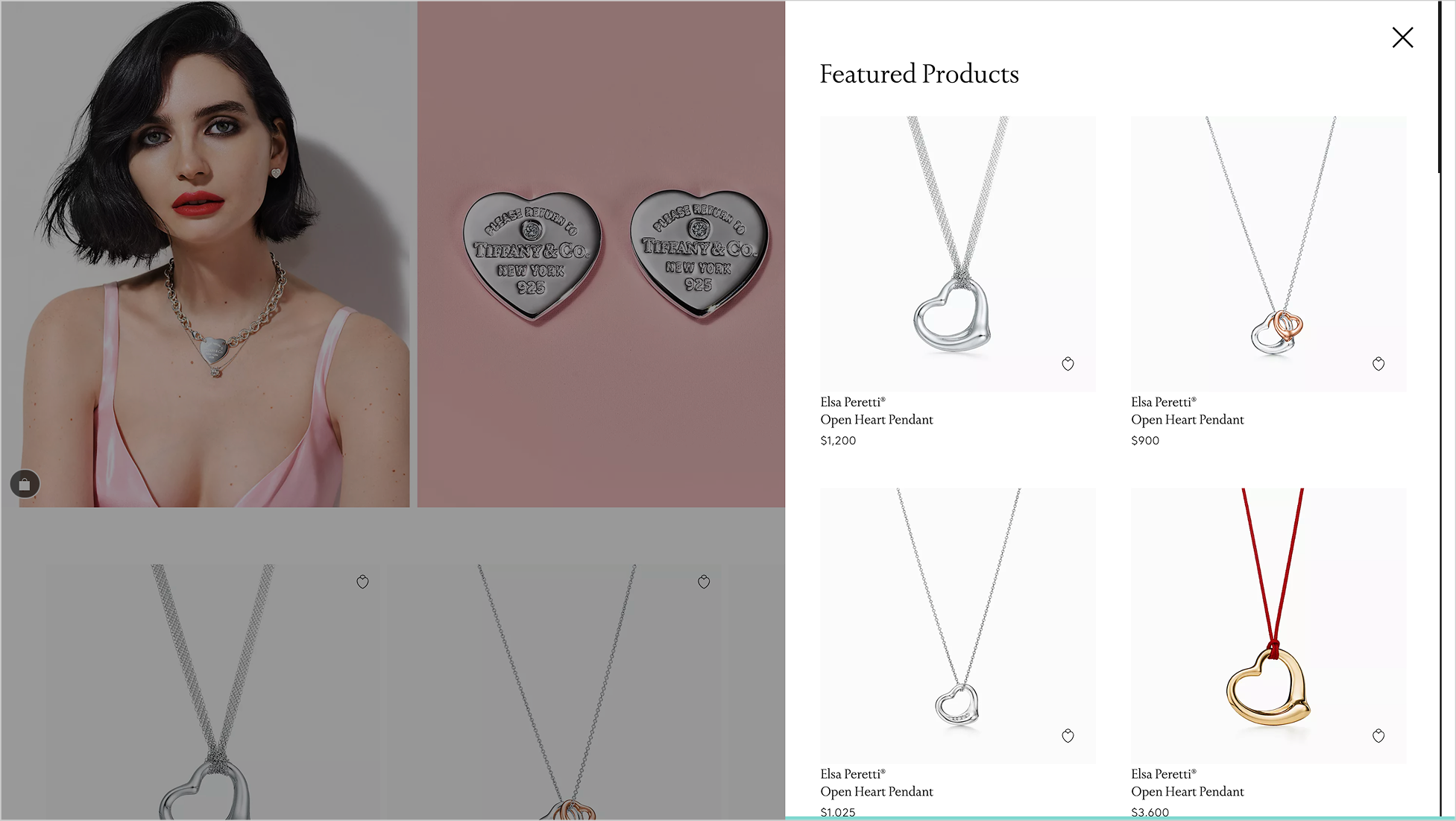
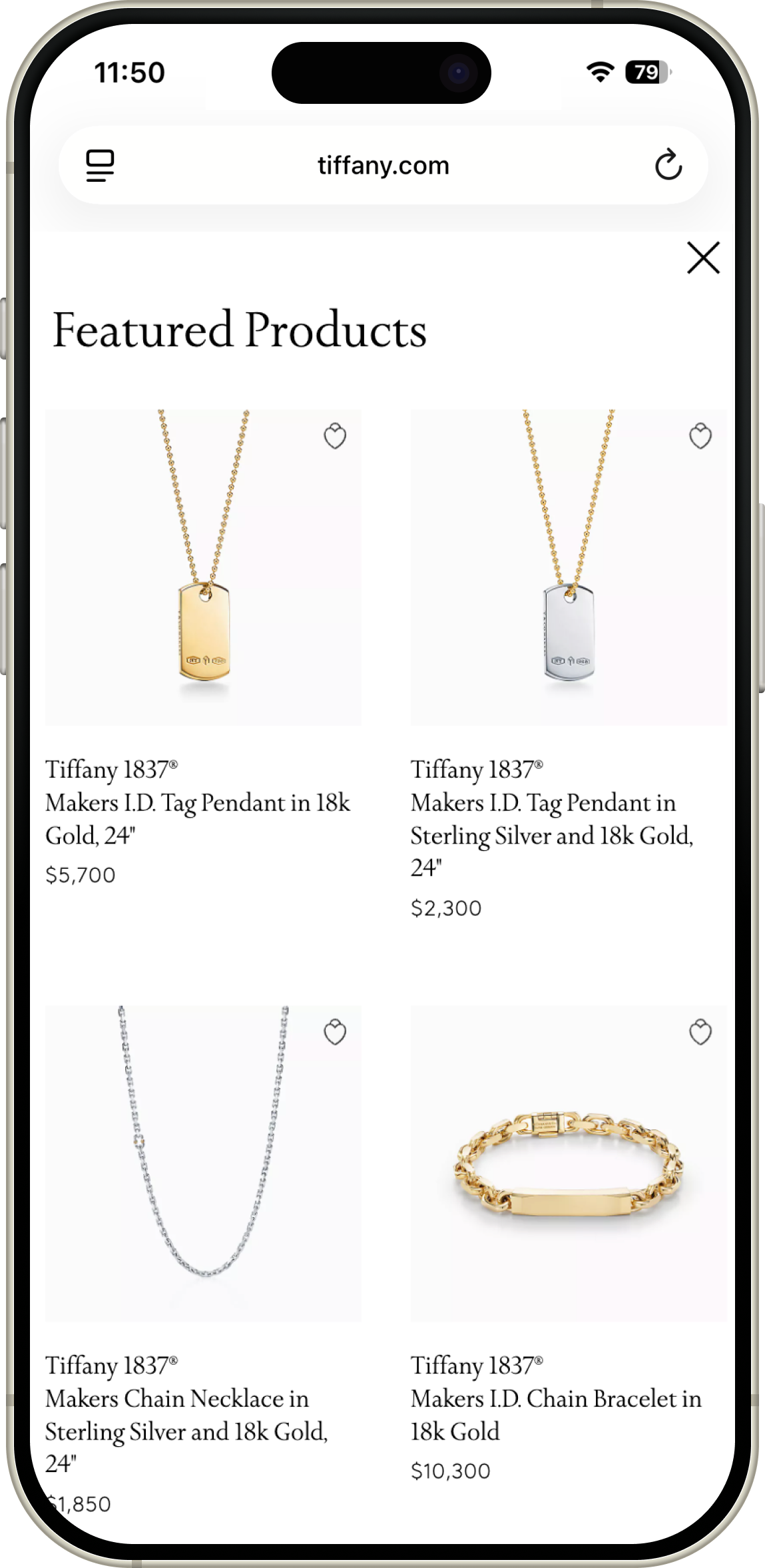
Because our editorial campaigns frequently feature models layered in several complex jewelry lines, navigating multi-product discovery within a single viewport was a massive UI hurdle. To lower cognitive strain, I designed a scrollable, high-fidelity slide-out drawer module that leveraged Recognition Rather Than Recall (Heuristic #6). Instead of forcing users to remember a piece of jewelry from the photo and search for it later, the drawer made the entire styled collection instantly visible and actionable across viewports:
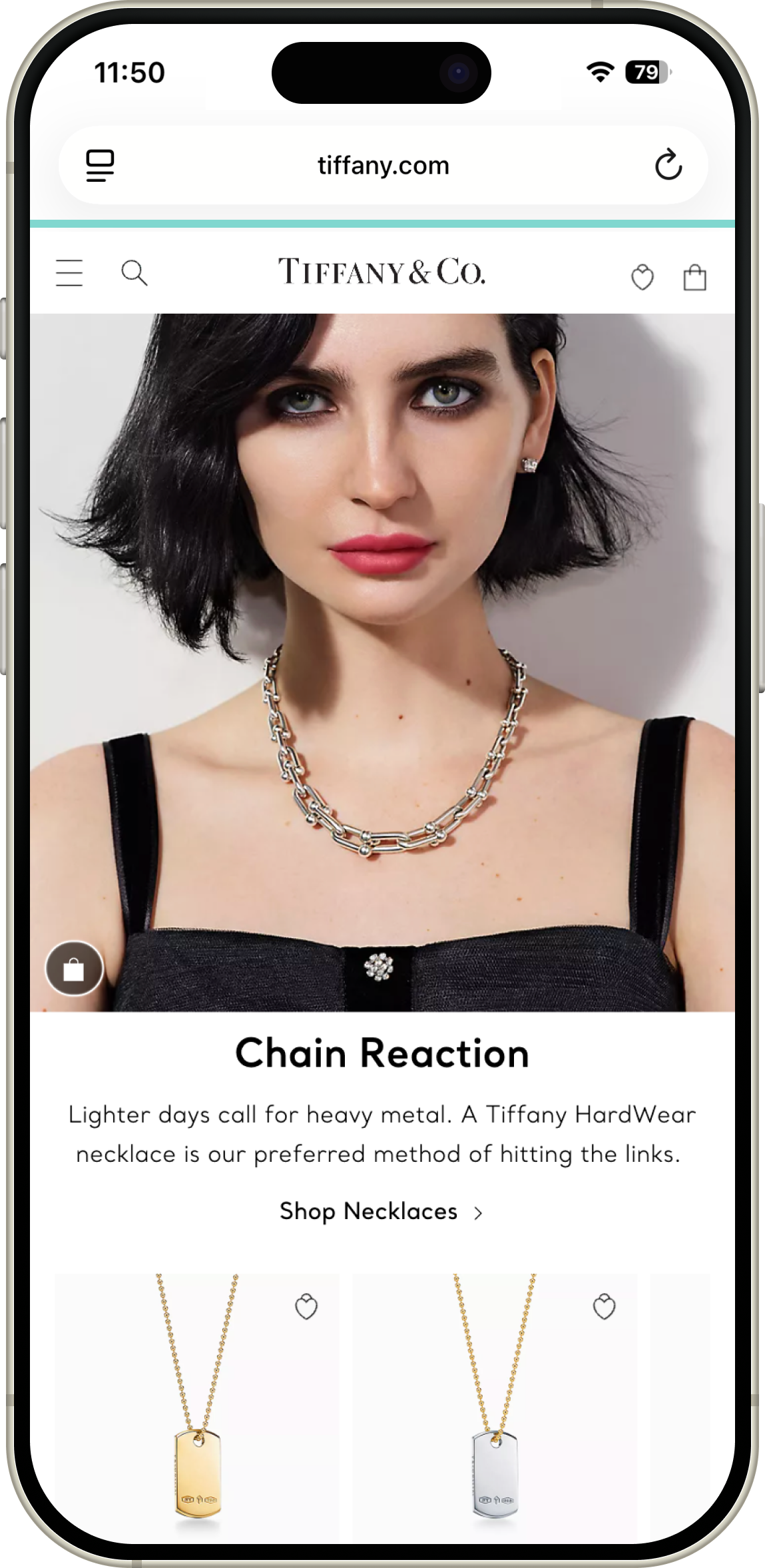
Mobile Optimization: On mobile screens, the drawer emerged full width to maximize readability and ease of interaction within tight viewport constraints. It organized the featured SKUs into a clean, two-column layout that scrolled vertically as much as needed, allowing single-tap access to individual Product Detail Pages.
Desktop Balancing: On desktop viewports, the drawer was intentionally scaled so the user could still see the original inspiration imagery behind it, maintaining their emotional immersion in the brand story while they explored the collection.
Data-Driven Optimization and Expansion
We maintained a strict optimization roadmap post-launch, establishing a comprehensive analytics monitoring plan to track exactly how users interacted with our new shoppable cues. After identifying an immediate, undeniable uplift in core engagement and click-through metrics, I led the strategic rollout of the Shop the Look component framework across other high-impact, content-heavy categories of the site. This iterative scaling turned our legacy media library into an active transactional asset, standardizing a high-performing interactive merchandising pattern across the global digital ecosystem.
Impact and Results
Multi-Item Discovery
Turned static editorial photography into an interactive checkout shortcut, pushing catalog exposure and multi-item purchase intent systematically above baseline site averages.
By transforming a static creative asset into an elegant, visual-first shopping ecosystem, we proved that strategic micro-interactions can drive measurable commercial value without compromising high-art luxury standards.
Amplified Cross-Sell Velocity: Elevated core product consideration across collections by encouraging mobile users to explore pre-styled looks, proving that visual storytelling is a powerful tool for multi-item acquisition.
Catalyzed PDP Catalog Exposure: Drove significantly deeper organic site engagement per session, as the high-fidelity two-column drawer acted as an interactive shortcut to the wider product catalog.
Frictionless Discovery-to-Checkout Transition: Strengthened core transactional health and minimized down-funnel drop-offs by seamlessly converting upper-funnel editorial inspiration into immediate purchase intent.
Standardized Interactive Visual Framework: Successfully expanded the global design system by codifying a repeatable, responsive visual commerce template, empowering marketing and creative teams to maximize the financial performance of brand photography autonomously
Zero Layout Drift
Codified a repeatable, responsive visual commerce component template, empowering global creative teams to scale interactive merchandising without technical support.
Next Case Study:
Tiffany & Co.
Elevating Third Party Automation to Luxury Service Standards →