TIFFANY & CO.
Turning Dense Sustainability Reporting into an Elegant Digital Ecosystem
Transforming a 100-page compliance report into a digital-first editorial hub proved that strategic information architecture can scale without a budget. Using existing components, this framework drove 20% organic traffic and lifted purchase intent.
Role
Manager, Digital Product Design / Senior Digital Product Designer
Focus
Information Architecture, ESG Digital Strategy, Content Strategy, Design Governance
Timeline
8 Weeks
Team
Product Management, Engineering, Sustainability, Creative, Content Strategy
The Challenge
Overcoming the Corporate Discovery Void
While sustainability is a core value at Tiffany & Co., the brand’s rigorous annual Environmental, Social, and Governance (ESG) compliance data was historically trapped inside a static, 100 page printed PDF. This document was impossible for mobile users to navigate and entirely invisible to active digital shoppers.
I partnered with the Sustainability and Copy teams to lead a digital transformation initiative to migrate this dense compliance data into a digital-first Sustainability Hub. The core challenge was cross-functional and architectural. We needed to honor strict legal reporting requirements and deliver a premium, editorial storytelling experience, all while operating under a zero-budget constraint that prohibited the creation of new engineering components or web features.
The Approach
Collaborative Ecosystem Mapping
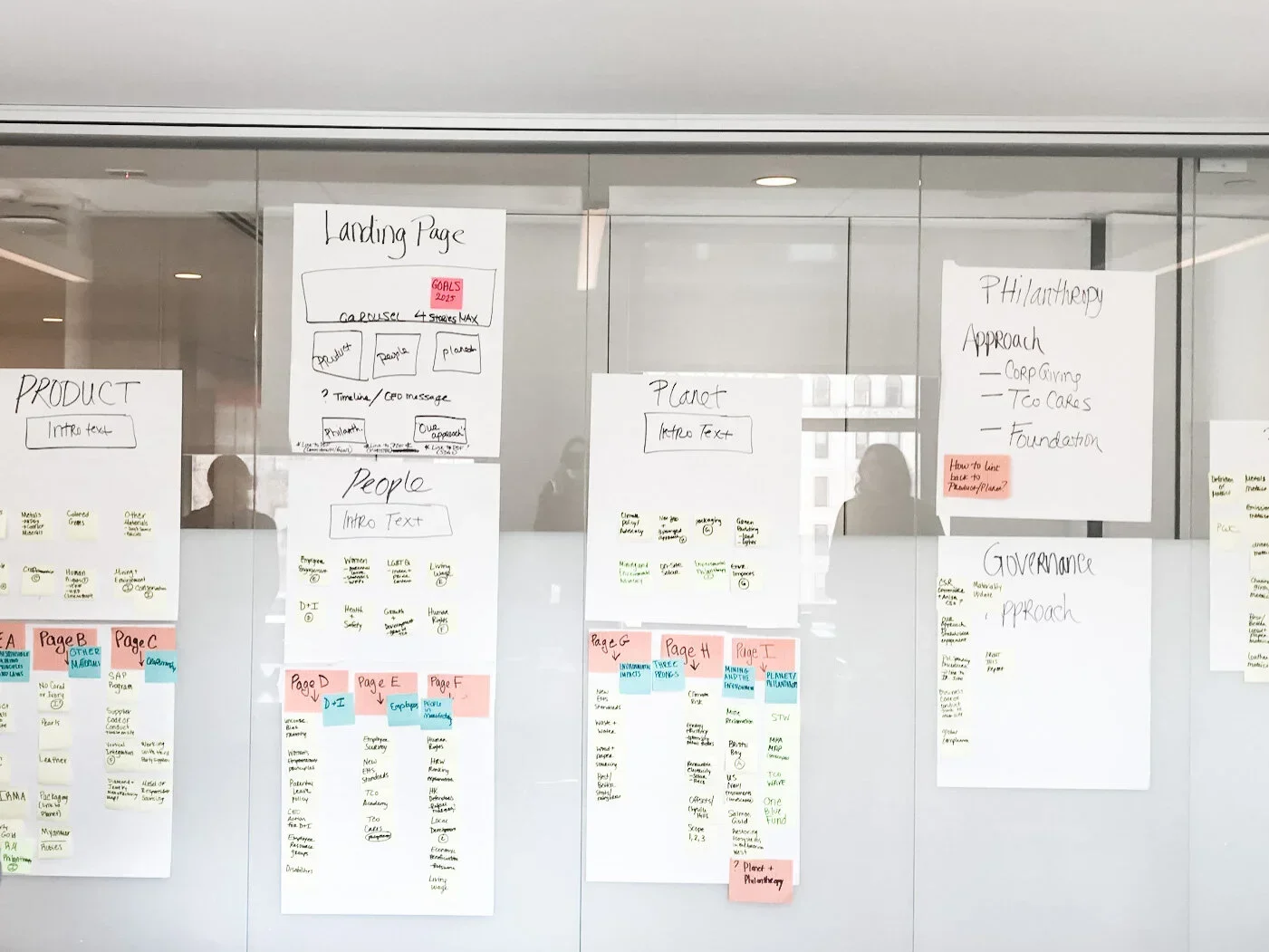
To build a high-impact digital home for this data without extra development resources, I led a comprehensive content audit alongside our Sustainability and Copy partners to move away from dry data tables and isolate trend-driven narrative arcs.
The Data Decoupling Workshop
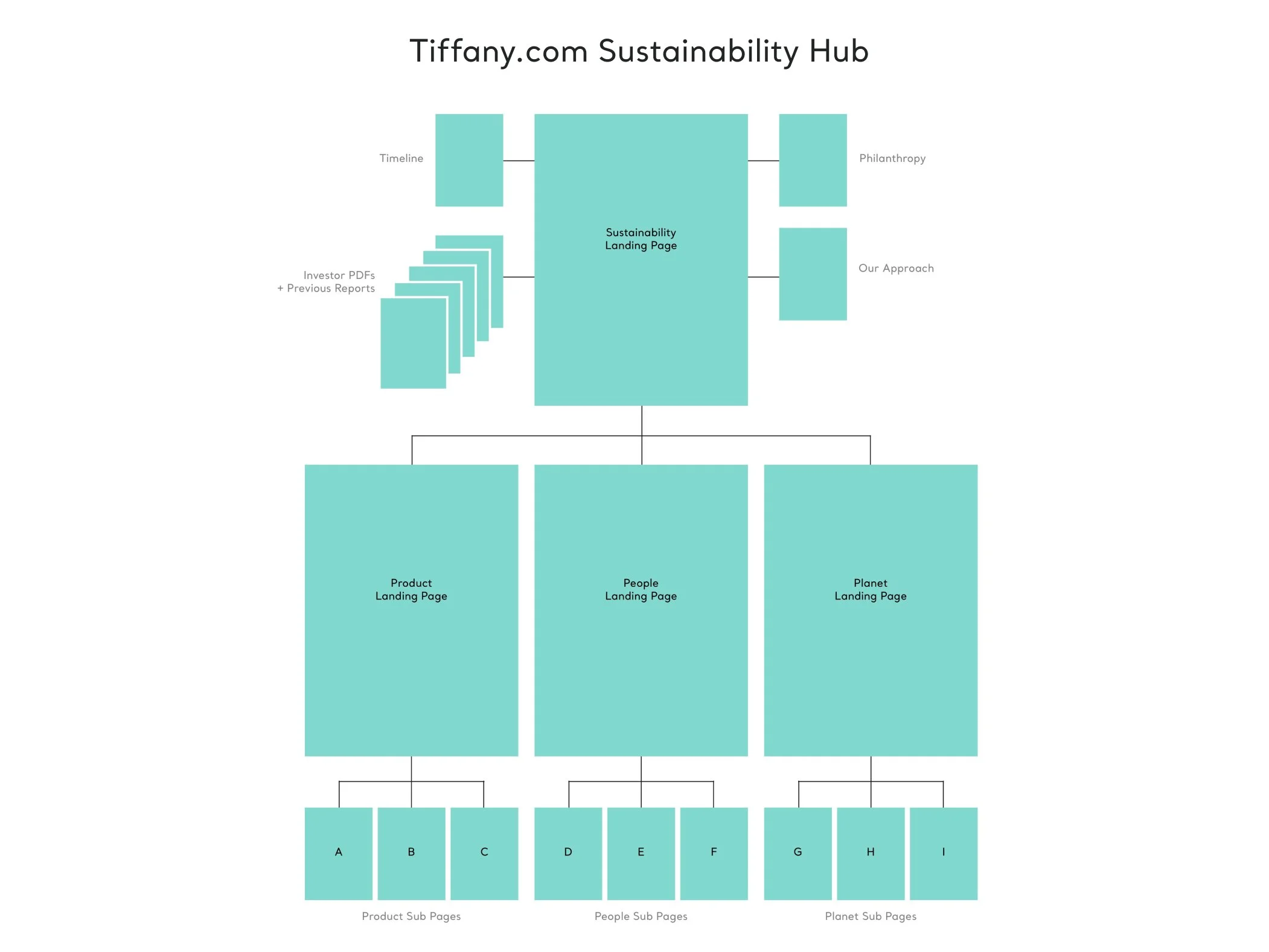
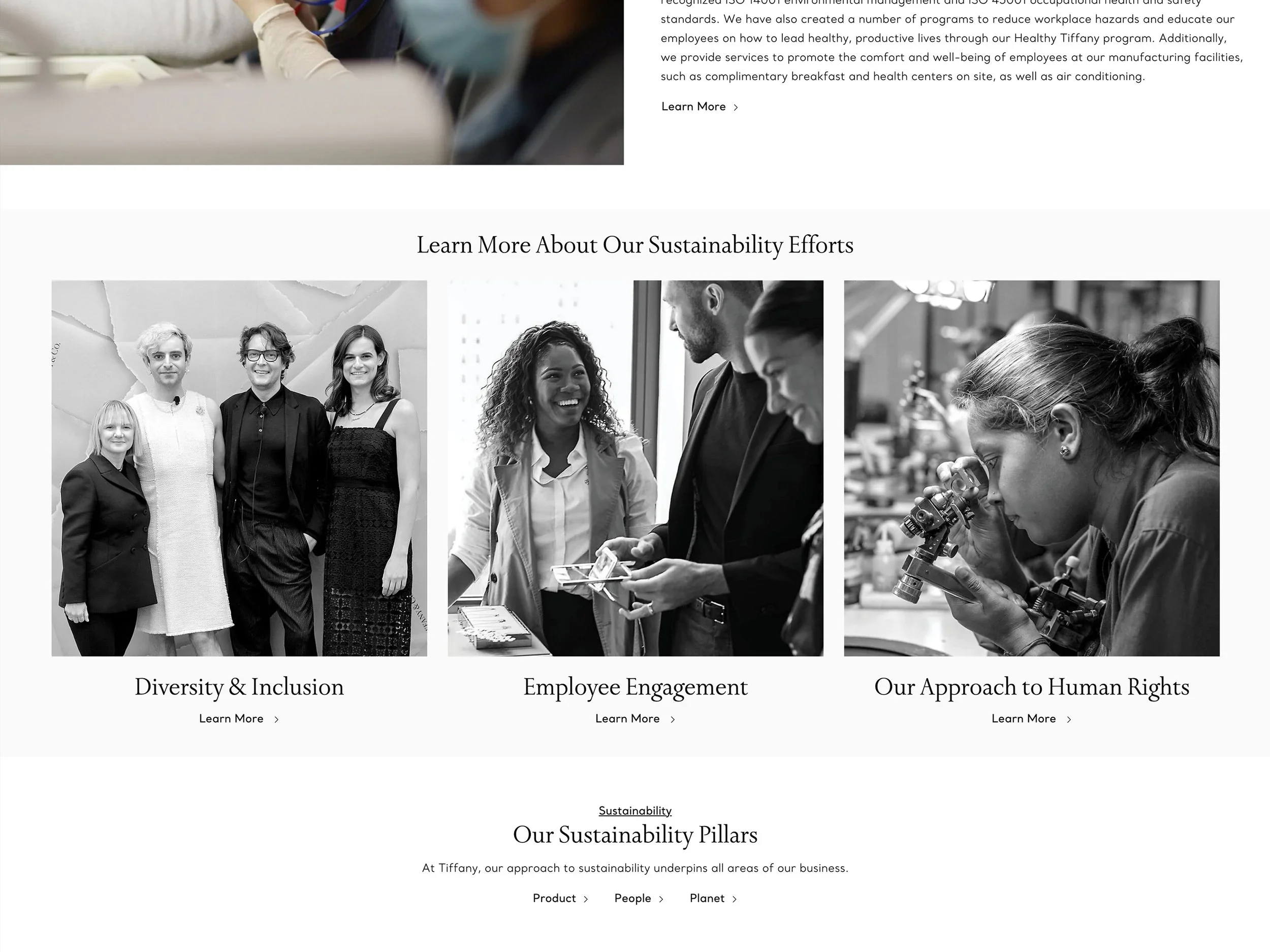
Together, we filtered through the one hundred page compliance report and extracted meaningful storylines that would thrive in an online storytelling format. We focused our editorial strategy on three core human-interest pillars: people, brand heritage, and the intricate craftsmanship of jewelry making, specifically focusing on the sourcing of metals and gemstones. To optimize organic discoverability, I mapped out a two-pronged entry strategy. We designed the hub to capture external organic search traffic seeking brand transparency, while simultaneously capturing high-intent internal traffic directly from the Product Detail Pages (PDPs) where customers were already actively evaluating investment jewelry.
UX Rigor
Progressive Disclosure and Modular Content Architecture
Our design framework was deeply rooted in Nielsen Norman usability heuristics, focusing specifically on Aesthetic and Minimalist Design (Heuristic #8) to manage extreme cognitive load.
To prevent choice paralysis and avoid overwhelming readers with dry legal text, I leaned heavily on the UX principle of Progressive Disclosure. I systematically repurposed our existing enterprise component library to accommodate this data-heavy use case in a creative way:
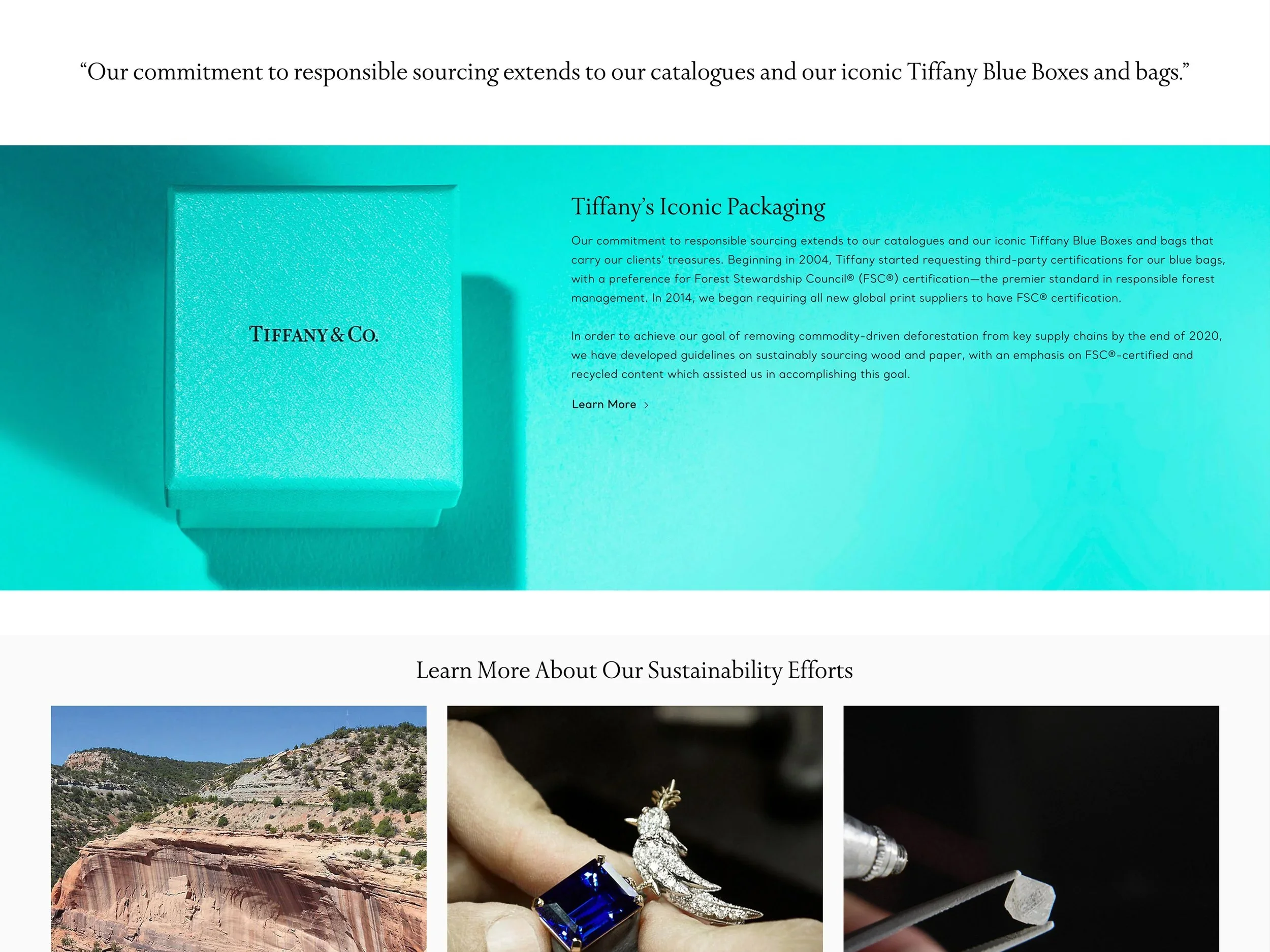
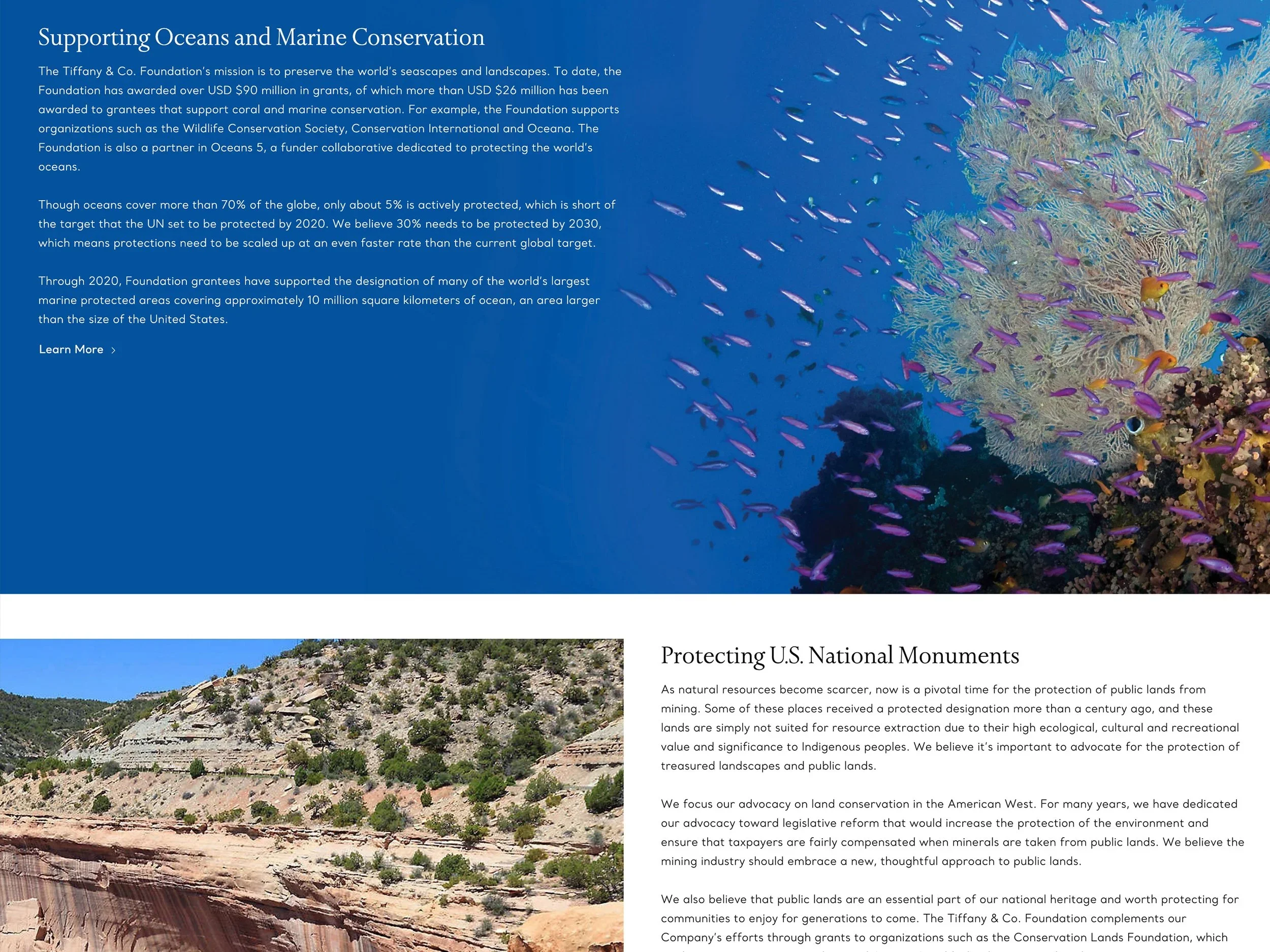
Managing Technical Copy: I deployed standard, highly optimized design system accordion modules to clean up and conceal complex legal footnotes, keeping them fully accessible to auditors but hidden from everyday shoppers until clicked.
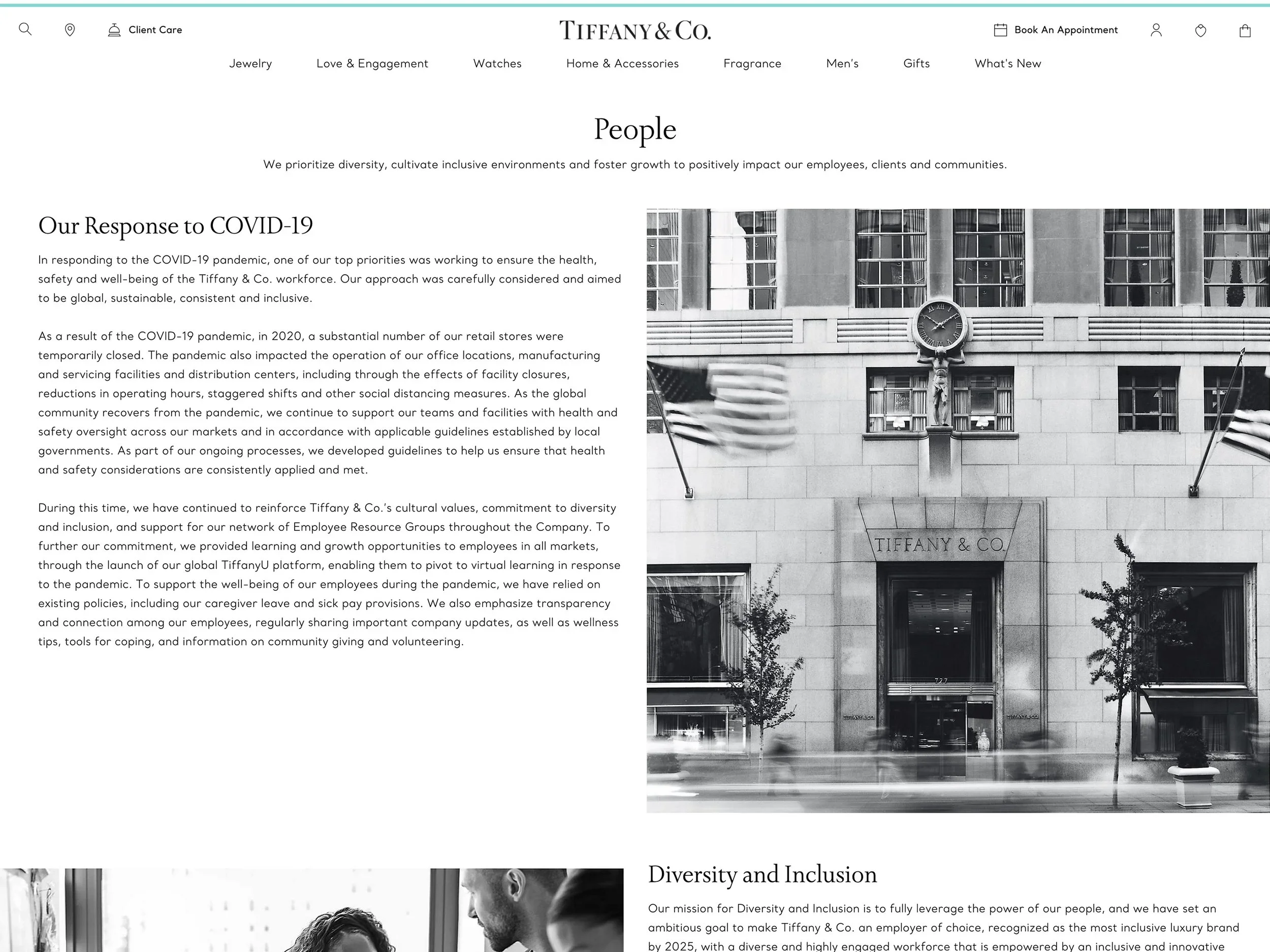
Visual Pacing: I meticulously balanced dense text blocks with large, high-quality portrait imagery modules to break up the copy grids, sustain visual interest, and maintain an elite, editorial pacing throughout the experience.
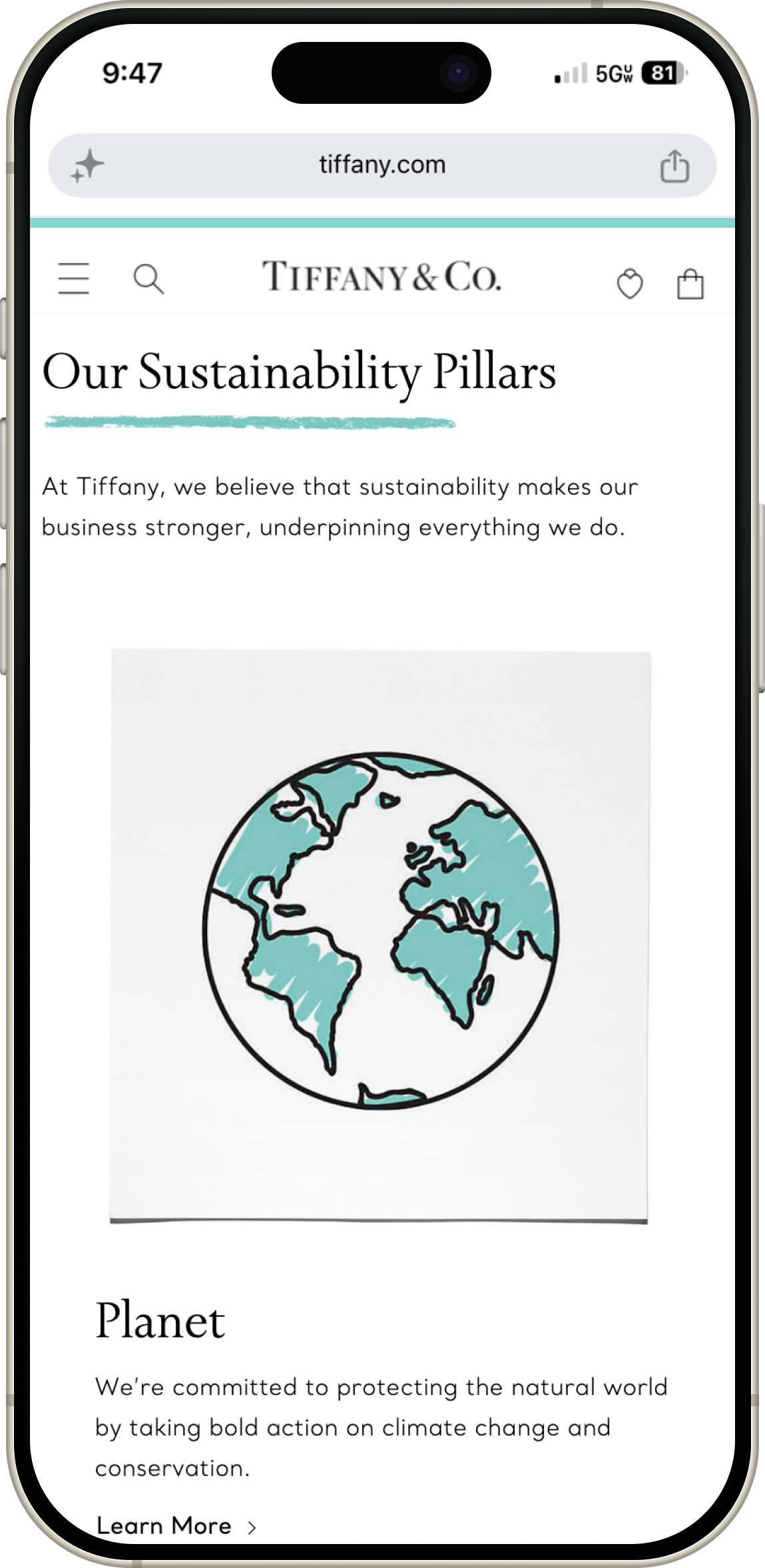
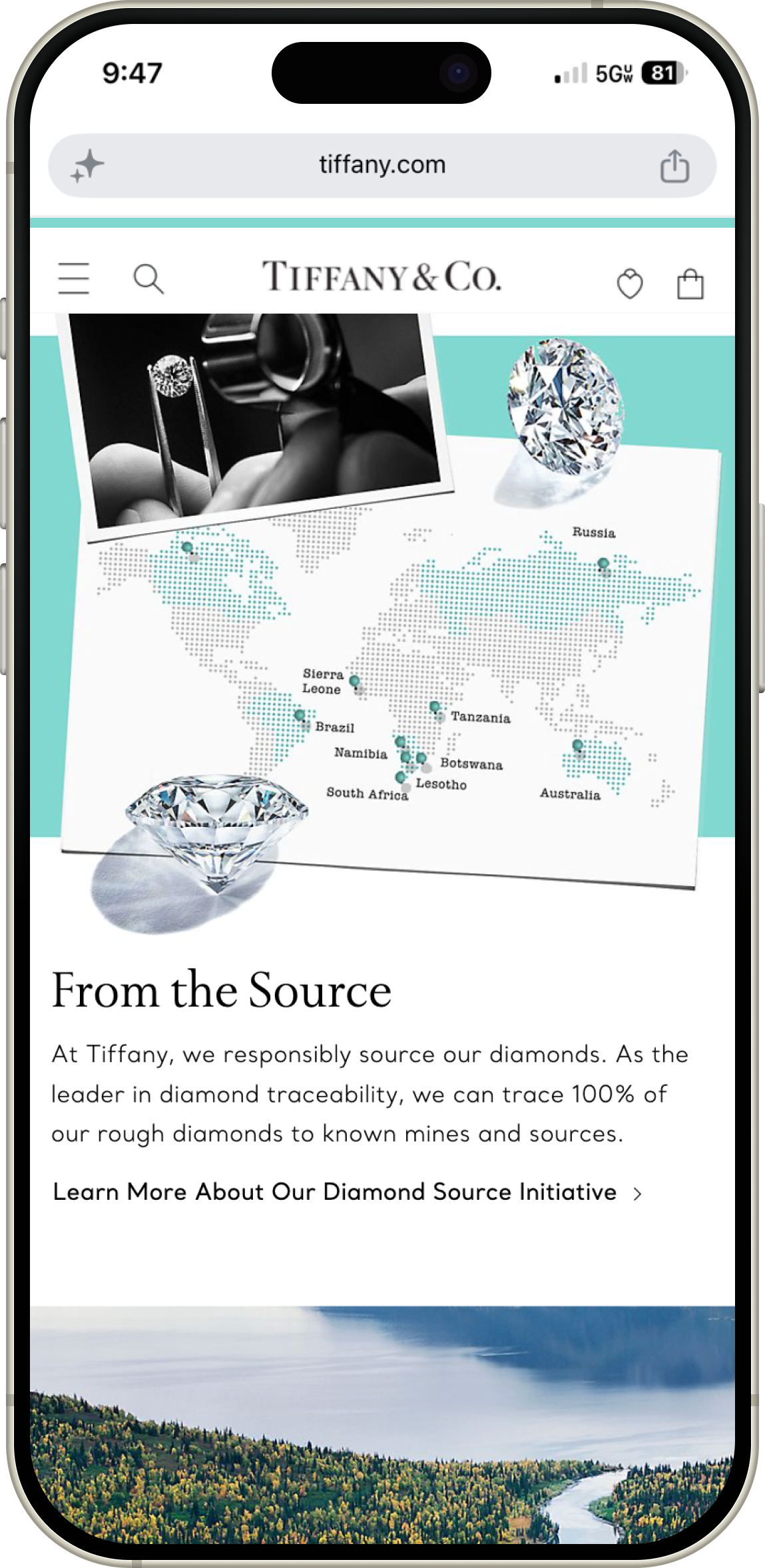
The Strategic Taxonomy: I engineered a three-part information architecture that grouped all storytelling assets into clear, intuitive categories: People, Planet, and Product.

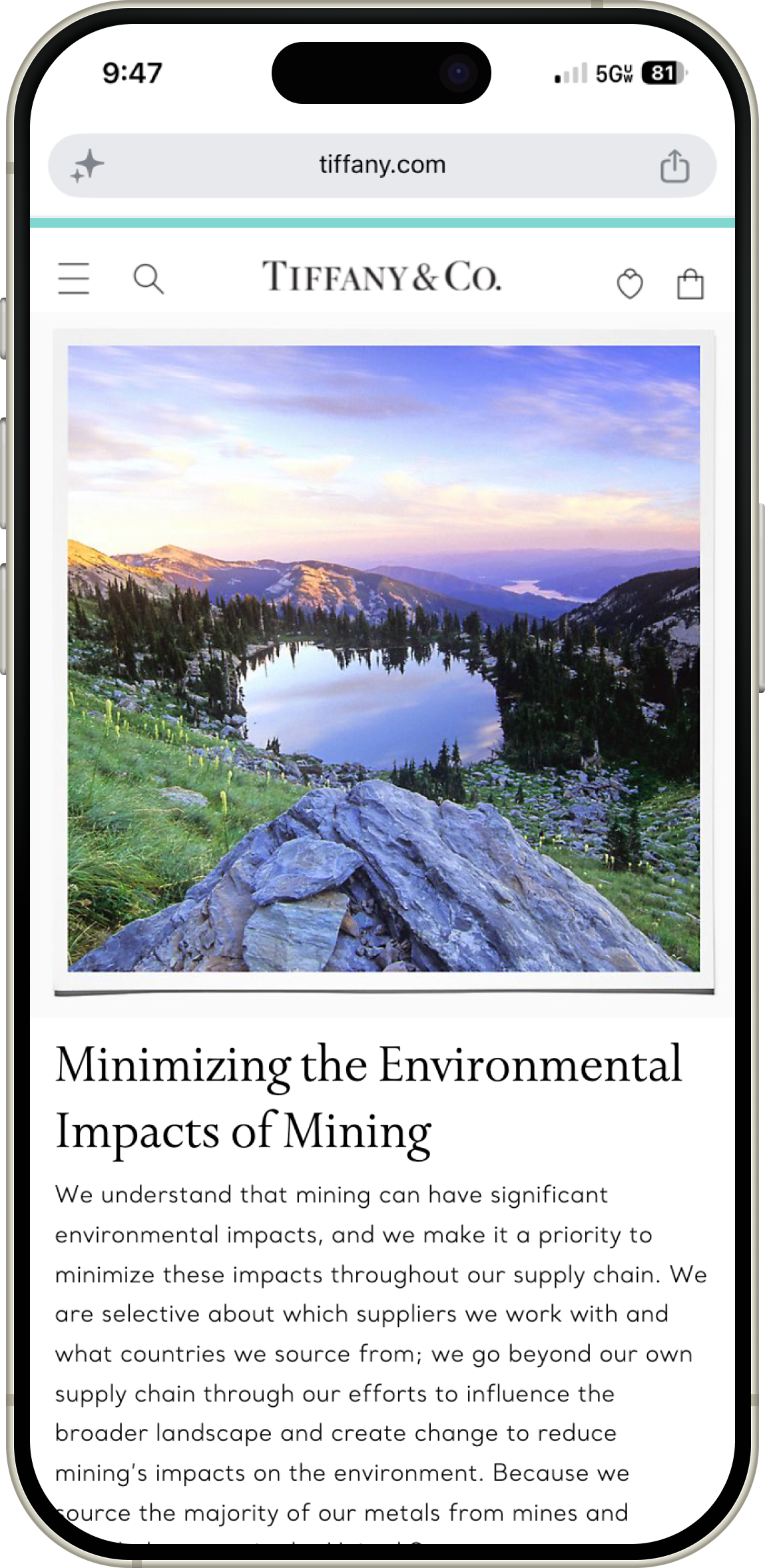
Engineering the Recirculation Loop Strategy
The true conversion victory of this project was engineering explicit navigation recirculation loops at the base of every sustainability narrative.
Rather than treating the hub as an informational dead end, I designed these modular paths to seamlessly route inspired users directly back into relevant e-commerce product category grids. If a customer was reading a story about our ethical gemstone tracking, the base of that section featured a curated bridge linking them directly to filtered diamond ring category pages. This transformed corporate transparency into a direct engine for product consideration, successfully closing the gap between brand values and e-commerce conversion.
To ensure the hub could scale dynamically for future reporting cycles, I codified this framework into a repeatable design governance playbook for our global Content and Site Publishing teams. This empowered internal partners to launch annual updates autonomously with total visual consistency and zero additional engineering support.
Impact and Results
“They're doing a lot more than I knew. It seems like, in terms of jewelry brands, they're really leading.”
“I have so much more respect for Tiffany.”
—Customer Feedback
Turned complex compliance data into an emotional brand connection and a sense of shared values.
20% Organic Traffic
Turned invisible annual data into an untapped organic search channel and a gateway for new customer discovery.
By transforming a dry compliance document into an elegant, visual-first storytelling ecosystem, we proved that strategic information architecture can drive measurable commercial value without requiring new technical overhead.
Cultivated Deep Buyer Confidence: Transformed transparent corporate storytelling into a powerful engine for product consideration, successfully looping inspired users back into the core shopping journey and outperforming baseline site benchmarks.
Elevated Product Discovery: Achieved an 82% PDP reach among hub visitors, significantly outperforming the standard site average of 51%.
Accelerated Purchase Intent: Drove a 5.8% Add-to-Cart rate, systematically tracking above the baseline site average of 5.3%.
Captured Untapped Search Intent: Created a high-performing organic acquisition channel, capturing 20% of total hub traffic directly from targeted search engine queries that previously had no relevant landing experience on the site.
Optimized Operational Publishing Velocity: Streamlined internal operations by engineering a repeatable template playbook, allowing global content teams to handle yearly updates with speed, consistency, and zero required engineering overhead.
Next Case Study:
Tiffany & Co.
Transforming Static Photography into a Checkout Shortcut →